 HI FRIENDS. Well, I stopped my summaries of Mein Kampf, Vol. II after Chapter 8 back in November 2020, took a break for Thanksgiving through New Year, after which the madness of January 2021 began, with the U.S. Capitol “riot” and the beginning of the criminal Biden administration taking center stage. Now that I've slowed way down on writing original commentary, and finished making much more of my site content visible and linked from the front page side bar (have you noticed?), I've decided to complete the special section on Mein Kampf (still so relevant today). So we begin with Chapter 9, Vol. II, using Thomas Dalton's side-by-side German to English translation (pictured here). Enjoy.
Chapt. 9, p 285 Basic Ideas Regarding the Meaning and Organization of the S.A. Summary (Part One)
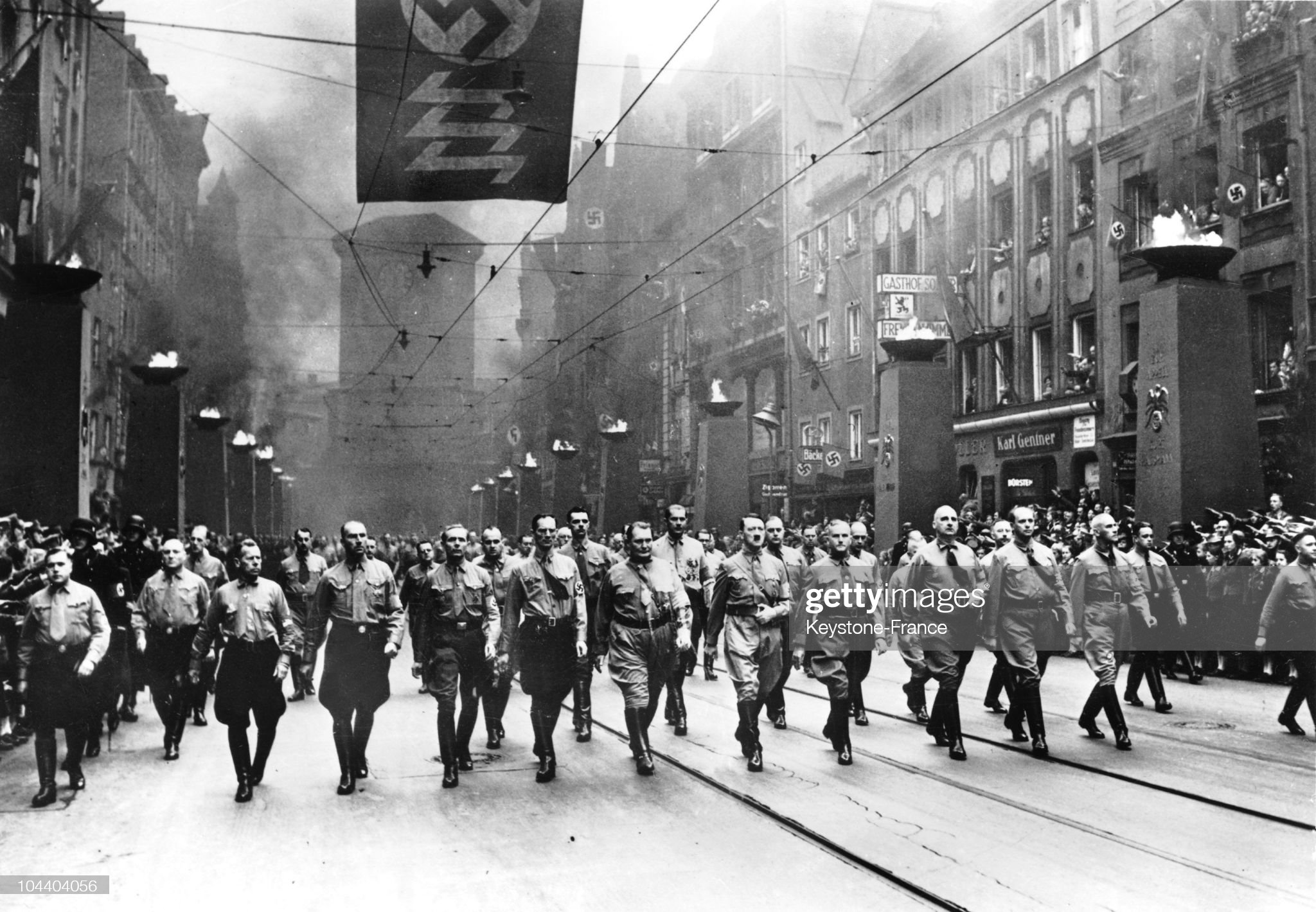
9.1 The three bases for authority in a state are popularity, power (force,) and tradition. Popularity alone is weak and must be bolstered with power. If these two are united, the authority becomes more stable and secure. An invincible foundation is laid by adding the authority of tradition.





 FLASHPOINT Kristallnacht 1938: Instigators, Victims and Beneficiaries