European History

"The International Jew" Study Hour - Episode 46

Published by carolyn on Thu, 2013-05-09 16:44

May 9, 2013

Hadding Scott and Carolyn Yeager read and comment on Chapter 41, “Jews Use the Peace Conference to Bind Poland.”

This chapter starts out with “trouble between Jews and other people is a continuous situation.” Naturally the huge number of Jews in Poland – as much as 10% of the population at that time – caused trouble for the Poles. International Jewry propagandized sporadic Polish reaction into “persecution” of tens of thousands – facilitating the entry of a quarter of a million Jews from Poland into the United States in a short period of time. The background information of why Poles acted as they did is given, along with how the Paris Peace Conference in 1919 gave the Jews of Poland everything they wanted. The chapter asks if the United States will do the same.

Image: Deliberations taking place at the Paris Peace Conference, dictated to by victorious France, England and the United States. Jews were reported to be much in evidence.

Note: We are using the Noontide Press publication of The International Jew — The World’s Foremost Problem which can be found online here as a pdf file.

May 8, 1945: As I remember ...

Published by carolyn on Tue, 2013-05-07 17:54

By Willy Wenger
May 5, 2013

I was in the final battle for Berlin - from the Seelow Heights up to the last bitter street fighting in the vicinity of the bunker of Adolf Hitler. All Berliners participated in this, the bloodiest battle on German soil. The city had already included for some days troops of the Red Army.

Knowledge of the possiblity of being liberated by the Twelfth  Army under the command of young General Walther Wenck must have been what gave us the hope and the courage to endure. But General Wenck came up only as far as Potsdam.

"Then was the terminus." Those were his words as I heard them from him in Geneva in 1966, a time that I was able to talk to him about it.

"The International Jew" Study Hour - Episode 45

Published by carolyn on Thu, 2013-05-02 16:52

May 2, 2013

Carolyn Yeager and Hadding Scott read and comment on Chapter 40, “Why the Jews Dislike the Morgenthau Report.”

The Morgenthau Report was the result of a fact-finding commission to Poland in 1919, in the wake of massive immigration of Jews from Poland into New York. The American Jewish press was claiming terrible persecution and pograms of Jews in Poland, but the commission report concluded that the claims were greatly exaggerated. Instead of 3,000 murdered in Lemberg, for instance, there were 76. On-the-scene investigation showed that Jews actually enjoyed a better standard of life than indigenous Poles. Since the 12th Century when Jews first came into Polish territory, the history is one in which Jews run all the business and commerce, getting rich off what Poles produce.

Illustration: Jewish merchants in nineteenth century Warsaw.

Note: We are using the Noontide Press publication of The International Jew — The World’s Foremost Problem which can be found online here as a pdf file.

The Odyssey of Fahnenjunker Wenger (Part Two)

Published by carolyn on Fri, 2013-04-26 14:45

The Odyssey of Fahnenjunker Wenger

Part Two - Conclusion

From the Seelow Heights—April 1945

Back Home to Leoben, Austria—July 1945

By Willy Wenger

An officer-candidate in the German Luftwaffe, Willy Wenger was only 18 in 1945 when his “odyssey” began. He is now 86. His older brother Leopold Wenger was awarded the Knight’s Cross, Germany's highest military decoration.

Translation and Introduction by Wilhelm Kriessmann

Editing by Carolyn Yeager
copyright 2013 Wilhelm Wenger

From April 20th onward - the final days of the Reich - 18 year old Willy Wenger was involved in the Battle for Berlin. His story continues right after receiving his first wound as he covered for German civilians trapped inside the cellar of a house. As he attempted a peek out the front door to check conditions, a Russian grenade exploded close to it. A grenade fragment struck his hand, bringing forth profuse bleeding.

For the time being we escaped hell; it was insanity what we tried to accomplish near the Sparre Platz next to a waterfront. (I still carry the grenade fragment in the ball of my left hand. I feel it only when I hit something accidentally.) We marched back to the Maikaefer barracks.

The long row of barracks on Chausseestrassee as it appeared in 1910.

I was sent to a first aid station to get properly bandaged and to receive a tetanus shot. Marching on, I was informed that it was the famous Hotel Adlon on the Unter den Linden, close to the Brandenburg Gate, where I could get help. With ruins and wreckage all around, I tried first to cross the wide Unter den Linden avenue – impossible with continual rocket fire from the Stalin Organ batteries. So I found the subway entrance and finally entered the Adlon, my first encounter with my future profession.

The Heretics' Hour: Comparing the German and Japanese surrender to the Allies

Published by carolyn on Mon, 2013-04-22 18:54

August 22, 2013

Why didn’t Hitler address the German nation considering its defeat as the Emperor Hirohito did in Japan? Why was Hirohito allowed to live and continue his reign, while Hitler and his party had to be eradicated totally? Why was Japan allowed to keep its industrial capacity and participate in world trade, but Germany not. One reason is the difference between Dwight David Eisenhower (the terrible Swedish Jew) and Douglas MacArthur.

Image:  FM Wilhelm Keitel, Chief of Army (center) with Chief of the Luftwaffe Stumpff (left), Admiral Friedeberg of the Kriegsmarine (right) are forced by Eisenhower's threats to surrender to the Soviet Union on May 8, 1945 in Berlin-Karlhorst.

Carolyn also looks at the continuing media attention to the  “problem” of antisemitism and what to do about it. Friday, April 26 is the 100th anniversary of the rape/murder of 13-year-old Mary Phagan by the Jew Leo Frank in Atlanta, Ga. The Anti-Defamation League was created 100 years ago to defend Frank and has been doing its best to prevent justice for Jews ever since.

Saturday Afternoon: On Hitler's birthday - He proves to be the world's most famous man

Published by carolyn on Sat, 2013-04-20 12:16

April 20, 2013

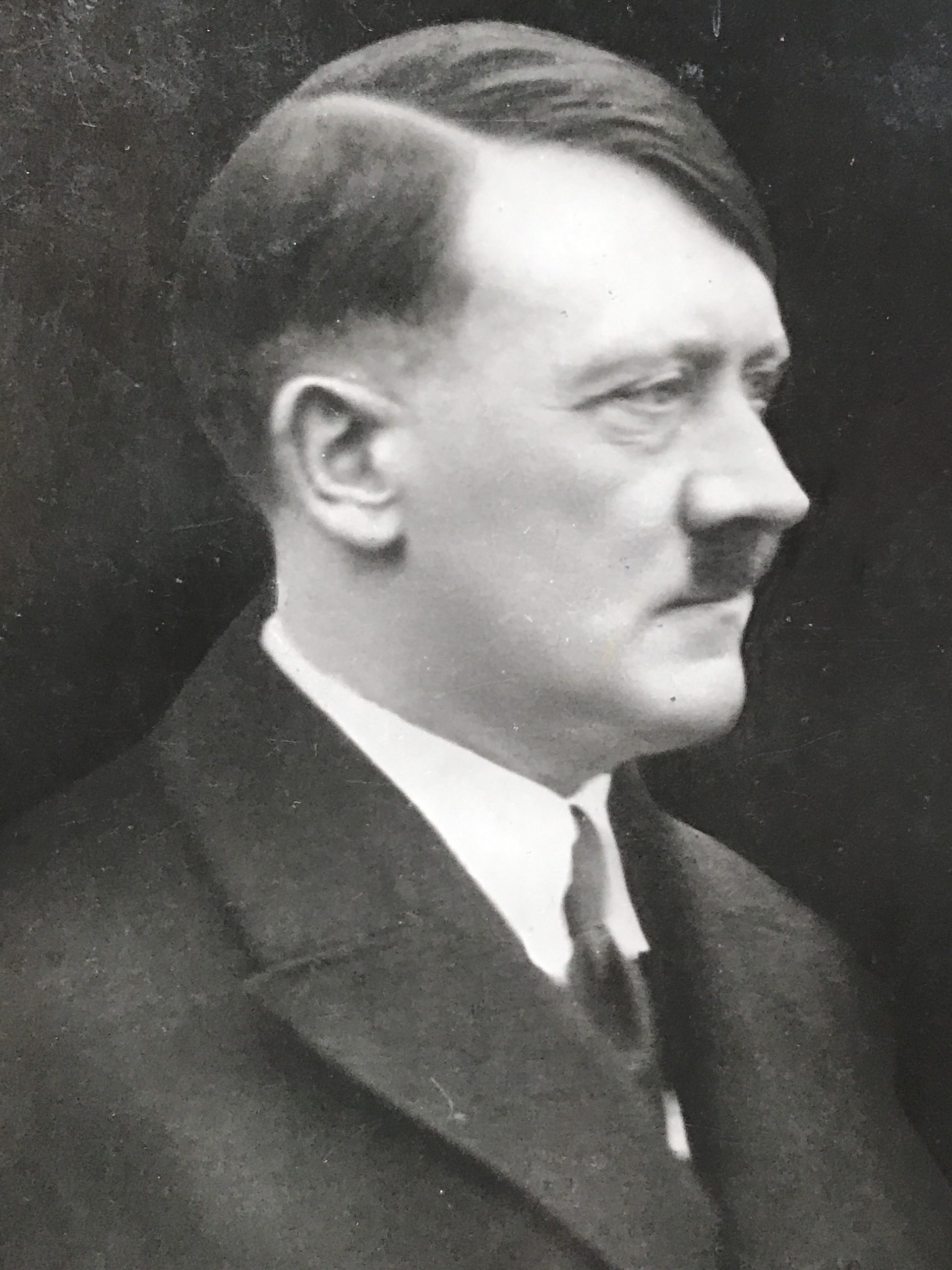
Adolf Hitler’s 124th birthday is celebrated with proof of his amazing popularity and face-name recognition. Examples of oratory by himself and by others praising him is read and commented on. Carolyn also brings up some news stories showing the abject fear exhibited by the enemies of mankind whenever a positive feeling toward Hitler might in some way be exposed by their institutions or media.

When all is taken into consideration, it’s clear that the German Führer is, at the very least, the single best-known historical personality in the world today.  I would say that’s quite a success story.

Image: An example of Hitler's amazing recognizability from only two shapes, demonstrating he has penetrated the consciousness of the entire world population.

The Odyssey of Fahnenjunker Wenger

Exclusive at carolynyeager.net! This is the never-before-published true story of a young German soldier thrown into the battle of Seelow Heights in the last month of the Second World Warhow he survived against all odds and managed to return home.

The Odyssey of Fahnenjunker Wenger

From the Seelow Heights—April 1945

Back Home to Leoben, Austria—July 1945

By Willy Wenger

An officer-candidate in the German Luftwaffe, Willy Wenger was only 18 in 1945 when his “odyssey” began. He is now 86. His older brother Leopold Wenger was awarded the Knight’s Cross, Germany's highest military decoration.

Translation and Introduction by Wilhelm Kriessmann

Editing by Carolyn Yeager
copyright 2012 Wilhelm Wenger

For the 17-year-old high school student Willy Wenger, his brother "Poldi," squadron leader at SG10 of the German Luftwaffe, was an outstanding role model. Willy wanted to follow in the footsteps of this highly decorated Jabo* pilot, who was five years older than himself. In July 1942, Willy received his C license for glider pilots (pictured at right on glider) and in April 1943 at the Reichssegelflugschule Spitzerberg near Vienna, he earned the Luftfahrerschein (air pilot pass). (See picture below)

[*Jagdbomber -  Refers to Bf 109 fighter aircraft converted to carry 250-kg bombs and carry out nuisance raids.]

The war situation in the spring of 1943 made it necessary to call up the final classes of high school students to the services of the Home Anti-Aircraft Forces, or FLAK. Wenger’s high school class assembled at barracks within the steel plant of the Herman Goering Werke (later named Voest-Alpine) at Linz/Donau. School lessons continued but the young pupils also had to learn how to handle the 3.7cm anti-aircraft guns and all the additional equipment.

Above: Wenger earns his basic pilot's license in 1943 at the flying school at Spitzerberg.

Because of injuries at gun practices, Willy was able to spend a furlough at home in Leoben at the same time his older brother 'Poldi, the Luftwaffen pilot, also arrived back home for a short leave.

Turbulent months followed his return from his New Year furlough to his FLAK unit in Linz. Only a few weeks after the class returned to the school in Maburg and report cards were issued, Wenger was called to the service at the RAD (Reichs Arbeits Dienst), Reichs Labor Service, an obligatory three-month draft. During the three very cold winter months of 1944, the RAD men were working on a railway ramp to connect the main line with a trunk line to a large armament plant in Silesia. Basic boot camp training was still part of their activities, however. (Willy is in center of group) In early May, Wenger was back at school in his last year but, as it turned out, only for a few weeks. There were merry reunions, parties and dancing and when the call for military service came, Wenger volunteered to be an officer candidate in the Luftwaffe.

On July 6, 1944, he arrived at the Kriegsschule 3 at Oschatz, in the state of Saxonia/Anhalt.  As a Fahnenjunker (cadet), he was looking forward to becoming a pilot like his brother.

That dream ended when Reichsmarschall Göring ordered 100,000 Luftwaffen personnel to fill the gaps suffered by the German army. In early spring 1945 Fahnenjunker Wenger, now Fallschirmjaeger (parachute trooper), was on the way to the Eastern front some 80km distance from Berlin.

We now let him tell his story:

Please continue reading HERE at carolynyeager.net

Newsletter 

Carolyn Yeager

Willy Wenger's Family Chronicle

Published by carolyn on Wed, 2013-04-03 09:49

It is with pride and pleasure that I present the continuation of the family his-story written by Willy Wenger that first appeared on March 14 under the title “the great hope: the German Reich.” Wenger was born in 1926 in Styria in the diminished independent nation of Austria, 'victim' of the Paris Peace Conference following WWI. Willy had a loving father and mother, and an older brother Leopold (named after their father) with whom he was very close. From the time Leopold Jr. first began to speak, he was called “Bibi” (a mispronounciation of Bubi by the child), a nickname that took hold with family and friends all the way through high school and beyond. However, when Leopold, Jr. went to the NSDAP Napoli school in Pomerania and entered pilot training in the Luftwaffe, he naturally did not want to be called Bibi, and he became known by the nickname 'Poldi. More will be forthcoming on that period of his life; for now I am leaving the name 'Bibi' as it appears in this written account because that is what Willy called him and still calls him today.

The Referendum of April 10th, 1938

By Willy Wenger

copyright 2013 Wilhelm Wenger and Carolyn Yeager

Translated by Hasso Castrup

Several months ago we had moved from the Timmerdorfer-Straße to Dreierschützenstraße No.16 where we had a larger apartment that belonged to the municipality. (Pictured below left with Willy, Gretl and their mother standing in front.) It consisted of a kitchen, a pantry, a small room – a cabinet, as we call it in Austria – with two beds, and a spacious loggia opening on a large garden in the inner part of the massive block. There was also a large living room, and the parents bedroom, as well as a hall and the toilet. Gretl slept in a small bed in the parents' bedroom, while Bibi and I shared the cabinet. Our building accommodated the municipal baths, which had bath tubs and showers which we used frequently.

Election Day was Sunday, April 10, 1938, on Vati's [Dad's] 45th birthday. Many had predicted that the referendum would be a big success for the Nazi regime, and with the end result, all doubts were gone: the people decided and the result was convincing. Never in history has there been such a clear result: In Leoben, the vote was 99.83 per cent in favor – the proof of the willingness of the Ostmark to join the German Reich.

The Days of Our Revolution

Published by carolyn on Tue, 2013-03-12 08:14

To mark the 75th Anniversary of the Austrian "revolution" (Anschluss - the joining with Greater Germany) -- here is the English translation for the days February 12 through March 20, 1938.  It is taken from the diary kept by Leopold Wenger (b. 1921), written at the time the events were taking place in Leoben, Styria when he was 16 years old. It comes to me courtesy of his younger brother Willy Wenger.

"Poldi," as he was nicknamed, became a Luftwaffen fighter pilot and a recipient of the Knight's Cross, National Socialist Germany's highest military decoration, in January 1945. He died a hero from wounds suffered in an air battle over Vienna in April 1945. -CY

From Leopold Wenger's Trip Diary

The Days of Our Revolution

copyright 2013 Wilhelm Wenger and Carolyn Yeager

Translated from the German by Hasso Castrup

12. February 1938 On our old campsite, at our cabin on Kraubatheck, there was for quite a long time already plans for a Hitler Youth camp again and it was scheduled to open this evening ... and as our term vacations were ending on 16 February, we were to spend four full days. Everything was already prepared and the food was already up there. I apologized that I could not come before Sunday because we had to sit in the police prison of Leoben and Wurschitz - 12 hours for a bicycle offense. (The fine was too expensive for us, therefore I had to endure the sentence). These 12 hours felt like an eternity. We were there together with all kinds of criminals: One of them told us that recently a Nazi was sitting there too, was then sent on to the district court but first he hid his revolver, cartridges and a swastika armband with the stamp of Donawitz in a wastebasket. One of the crooks found it and, with pleasure, handed it to the police.

Below: Our cabin in Schladnitzgraben; Right: Illegal Hitler Youth meet for skiing.

Group picture of Leoben illegal Hitler Youth, Feburary 1938

He asked me if I ever had anything to do with the police. Surprised, I denied it. Then he told me that our comrade Tiefental was brought to police HQ (hauled directly from his job) and interrogated by Major Zenz. He was shown a list, comprising all members of our [Hitler Youth] group in Leoben, including our group leader Marek. All the Scharführers, etc. were listed exactly. We were shocked. No one could imagine how the police got this information. That was the reason why the Hitler Youth camp had to be canceled immediately on account of the risk of a razzia [raid].

Pages