World War II

May 8, 1945: As I remember ...

Published by carolyn on Tue, 2013-05-07 17:54

By Willy Wenger
May 5, 2013

I was in the final battle for Berlin - from the Seelow Heights up to the last bitter street fighting in the vicinity of the bunker of Adolf Hitler. All Berliners participated in this, the bloodiest battle on German soil. The city had already included for some days troops of the Red Army.

Knowledge of the possiblity of being liberated by the Twelfth  Army under the command of young General Walther Wenck must have been what gave us the hope and the courage to endure. But General Wenck came up only as far as Potsdam.

"Then was the terminus." Those were his words as I heard them from him in Geneva in 1966, a time that I was able to talk to him about it.

May 8th German Capitulation Day - how legal is it?

Published by carolyn on Mon, 2013-05-06 20:22

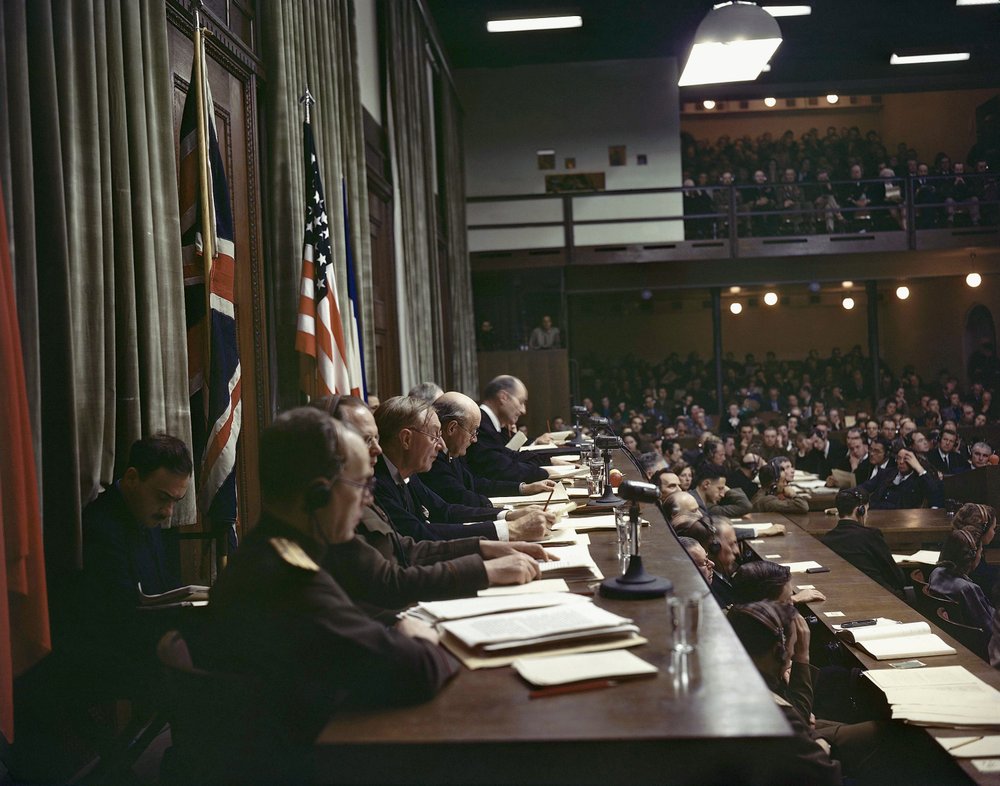
This instrument of surrender was signed on May 7, 1945, at Gen. Dwight D. Eisenhower's headquarters in Rheims by Gen. Alfred Jodl, Chief of Staff of the German Army. At the same time, he signed three other surrender documents, one each for Great Britain, Russia, and France. Signatories: On behalf of the German High Command. JODL. IN THE PRESENCE OF: On behalf of the Supreme Commander, Allied Expeditionary Force. W. B. SMITH On behalf of the Soviet High Command. SOUSLOPAROV. Witnessed by F SEVEZ Major General, French Army. For an enlarged version, go here.

On May 7, 1945 the German Instrument of Surrender was signed in Rheims, France by representatives of the Oberkommando der Wehrmacht (OKW) and the Allied Expeditionary Force [US and UK] together with the Soviet High Command. Those signing were Alfred Jodl of the OKW, Walter Bedell Smith of the Western Allies, and Ivan Sousloparov of the Soviet Union.

On May 8, a second signing took place in Berlin by representatives of the three armed services of the OKW [Keitel, Stumpff and Friedeberg] and the Allied Expeditionary Force together with the Supreme High Command of the Red Army. French and US representatives signed as witnesses.

While it was in three languages, the document states that only the English version was considered authoritative.

Tag der Kapitulation in Germany is known in the West as VE Day (Victory in Europe).

Category 

World War II

Saturday Afternoon: Questioning and separating the real from the fake

Published by carolyn on Sat, 2013-04-27 13:35

April 27, 2013

A mix of subjects ranging from the Boston Marathon bombing – to the pure propaganda play of a 20th Anniversary of the U.S. Holocaust Memorial Museum in Washington, DC – to the Czech treatment of Germans in May 1945 and since. Some of the points made:

  • Are the “victims” we see on television and in photos actors hired to participate in a drill;
  • Media fakery is becoming more believable to more people, and fits the political climate;
  • All-Jewish-run museum in United States claims right to offer a National Tribute to Holocaust Survivors with Elie Wiesel and Bill Clinton speaking;
  • Special award given to Susan Eisenhower (in honor of her grandfather “Ike”) and Polish Jew Wladyslaw Bartoszewski;
  • Outrageous lies and nonsense featured at holocaust museum’s special exhibition “Some Were Neighbors”;
  • Thirty-five million visitors since museum opened – 1/3 from schools (forced attendance);
  • Stop contributing to Mark Weber’s IHR and donate to Vincent Reynouard instead.
  • Willy Wenger tells in his WWII memoir about his own experience with Czechs when traveling through the new Czech Republic on his way home to Austria;
  • Hadding Scott joins the program in the last half hour to comment on German treatment of Poles from 1939-1944 and on whether German dominance in Europe is natural.

Image: Toy ‘Nazi’ figurines are supposed to show the “demonic appearing in the most minute details” at the USHMM special exhibition titled, “Some Were Neighbors, “ meant to keep the guilt trip going.

The Odyssey of Fahnenjunker Wenger (Part Two)

Published by carolyn on Fri, 2013-04-26 14:45

The Odyssey of Fahnenjunker Wenger

Part Two - Conclusion

From the Seelow Heights—April 1945

Back Home to Leoben, Austria—July 1945

By Willy Wenger

An officer-candidate in the German Luftwaffe, Willy Wenger was only 18 in 1945 when his “odyssey” began. He is now 86. His older brother Leopold Wenger was awarded the Knight’s Cross, Germany's highest military decoration.

Translation and Introduction by Wilhelm Kriessmann

Editing by Carolyn Yeager
copyright 2013 Wilhelm Wenger

From April 20th onward - the final days of the Reich - 18 year old Willy Wenger was involved in the Battle for Berlin. His story continues right after receiving his first wound as he covered for German civilians trapped inside the cellar of a house. As he attempted a peek out the front door to check conditions, a Russian grenade exploded close to it. A grenade fragment struck his hand, bringing forth profuse bleeding.

For the time being we escaped hell; it was insanity what we tried to accomplish near the Sparre Platz next to a waterfront. (I still carry the grenade fragment in the ball of my left hand. I feel it only when I hit something accidentally.) We marched back to the Maikaefer barracks.

The long row of barracks on Chausseestrassee as it appeared in 1910.

I was sent to a first aid station to get properly bandaged and to receive a tetanus shot. Marching on, I was informed that it was the famous Hotel Adlon on the Unter den Linden, close to the Brandenburg Gate, where I could get help. With ruins and wreckage all around, I tried first to cross the wide Unter den Linden avenue – impossible with continual rocket fire from the Stalin Organ batteries. So I found the subway entrance and finally entered the Adlon, my first encounter with my future profession.

The Heretics' Hour: Comparing the German and Japanese surrender to the Allies

Published by carolyn on Mon, 2013-04-22 18:54

August 22, 2013

Why didn’t Hitler address the German nation considering its defeat as the Emperor Hirohito did in Japan? Why was Hirohito allowed to live and continue his reign, while Hitler and his party had to be eradicated totally? Why was Japan allowed to keep its industrial capacity and participate in world trade, but Germany not. One reason is the difference between Dwight David Eisenhower (the terrible Swedish Jew) and Douglas MacArthur.

Image:  FM Wilhelm Keitel, Chief of Army (center) with Chief of the Luftwaffe Stumpff (left), Admiral Friedeberg of the Kriegsmarine (right) are forced by Eisenhower's threats to surrender to the Soviet Union on May 8, 1945 in Berlin-Karlhorst.

Carolyn also looks at the continuing media attention to the  “problem” of antisemitism and what to do about it. Friday, April 26 is the 100th anniversary of the rape/murder of 13-year-old Mary Phagan by the Jew Leo Frank in Atlanta, Ga. The Anti-Defamation League was created 100 years ago to defend Frank and has been doing its best to prevent justice for Jews ever since.

The Odyssey of Fahnenjunker Wenger

Exclusive at carolynyeager.net! This is the never-before-published true story of a young German soldier thrown into the battle of Seelow Heights in the last month of the Second World Warhow he survived against all odds and managed to return home.

The Odyssey of Fahnenjunker Wenger

From the Seelow Heights—April 1945

Back Home to Leoben, Austria—July 1945

By Willy Wenger

An officer-candidate in the German Luftwaffe, Willy Wenger was only 18 in 1945 when his “odyssey” began. He is now 86. His older brother Leopold Wenger was awarded the Knight’s Cross, Germany's highest military decoration.

Translation and Introduction by Wilhelm Kriessmann

Editing by Carolyn Yeager
copyright 2012 Wilhelm Wenger

For the 17-year-old high school student Willy Wenger, his brother "Poldi," squadron leader at SG10 of the German Luftwaffe, was an outstanding role model. Willy wanted to follow in the footsteps of this highly decorated Jabo* pilot, who was five years older than himself. In July 1942, Willy received his C license for glider pilots (pictured at right on glider) and in April 1943 at the Reichssegelflugschule Spitzerberg near Vienna, he earned the Luftfahrerschein (air pilot pass). (See picture below)

[*Jagdbomber -  Refers to Bf 109 fighter aircraft converted to carry 250-kg bombs and carry out nuisance raids.]

The war situation in the spring of 1943 made it necessary to call up the final classes of high school students to the services of the Home Anti-Aircraft Forces, or FLAK. Wenger’s high school class assembled at barracks within the steel plant of the Herman Goering Werke (later named Voest-Alpine) at Linz/Donau. School lessons continued but the young pupils also had to learn how to handle the 3.7cm anti-aircraft guns and all the additional equipment.

Above: Wenger earns his basic pilot's license in 1943 at the flying school at Spitzerberg.

Because of injuries at gun practices, Willy was able to spend a furlough at home in Leoben at the same time his older brother 'Poldi, the Luftwaffen pilot, also arrived back home for a short leave.

Turbulent months followed his return from his New Year furlough to his FLAK unit in Linz. Only a few weeks after the class returned to the school in Maburg and report cards were issued, Wenger was called to the service at the RAD (Reichs Arbeits Dienst), Reichs Labor Service, an obligatory three-month draft. During the three very cold winter months of 1944, the RAD men were working on a railway ramp to connect the main line with a trunk line to a large armament plant in Silesia. Basic boot camp training was still part of their activities, however. (Willy is in center of group) In early May, Wenger was back at school in his last year but, as it turned out, only for a few weeks. There were merry reunions, parties and dancing and when the call for military service came, Wenger volunteered to be an officer candidate in the Luftwaffe.

On July 6, 1944, he arrived at the Kriegsschule 3 at Oschatz, in the state of Saxonia/Anhalt.  As a Fahnenjunker (cadet), he was looking forward to becoming a pilot like his brother.

That dream ended when Reichsmarschall Göring ordered 100,000 Luftwaffen personnel to fill the gaps suffered by the German army. In early spring 1945 Fahnenjunker Wenger, now Fallschirmjaeger (parachute trooper), was on the way to the Eastern front some 80km distance from Berlin.

We now let him tell his story:

Please continue reading HERE at carolynyeager.net

Newsletter 

Carolyn Yeager

The Odyssey of Fahnenjunker Wenger

Published by carolyn on Tue, 2013-04-16 18:59

Exclusive at carolynyeager.net! This is the never-before-published true story of a young German soldier thrown into the battle of Seelow Heights in the last month of the Second World Warhow he survived against all odds and managed to return home.

The Odyssey of Fahnenjunker Wenger

From the Seelow Heights—April 1945

Back Home to Leoben, Austria—July 1945

By Willy Wenger

An officer-candidate in the German Luftwaffe, Willy Wenger was only 18 in 1945 when his “odyssey” began. He is now 86. His older brother Leopold Wenger was awarded the Knight’s Cross, Germany's highest military decoration.

Translation and Introduction by Wilhelm Kriessmann

Editing by Carolyn Yeager
copyright 2013 Wilhelm Wenger

For the 17-year-old high school student Willy Wenger, his brother "Poldi," squadron leader at SG10 of the German Luftwaffe, was an outstanding role model. Willy wanted to follow in the footsteps of this highly decorated Jabo* pilot, who was five years older than himself. In July 1942, Willy received his C license for glider pilots (pictured at right on glider) and in April 1943 at the Reichssegelflugschule Spitzerberg near Vienna, he earned the Luftfahrerschein (air pilot pass). (See picture below)

[*Jagdbomber: fighter-bomber ]

The war situation in the spring of 1943 made it necessary to call up the final classes of high school students to the services of the Home Anti-Aircraft Forces, or FLAK. Wenger’s high school class assembled at barracks within the steel plant of the Herman Goering Werke (later named Voest-Alpine) at Linz/Donau. School lessons continued but the young pupils also had to learn how to handle the 3.7cm anti-aircraft guns and all the additional equipment.

Above: Wenger earns his basic pilot's license in 1943 at the flying school at Spitzerberg.

Because of injuries at gun practices, Willy was able to spend a furlough at home in Leoben at the same time his older brother 'Poldi, the Luftwaffen pilot, also arrived back home for a short leave.

Category 

Germany, World War II

Saturday Afternoon: A visit with Shoabloger

Published by carolyn on Sat, 2013-04-13 12:01

April 13, 2013

Hasso Castrup from Denmark, creator of the new website Shoabloger is Carolyn’s guest. Hasso’s special hobby is translating French and German revisionist texts into English and Polish. Currently he is featuring the 2007 Horst Mahler interview by the Jew Michael Friedman, posting it in parts because of it’s length. Among the main topics discussed are:

  • Hasso’s mixed Polish-German family’s experience between the wars, and during & after WWII;
  • The 1943 Jewish uprising in Warsaw vs the August ’44 Polish uprising there;
  • How Poles were treated by the Germans and how German officials sought to identify ethnic-Germans or part-Germans;
  • Soviet/communist treatment of Poles vs. German ‘Nazi’ treatment of Poles;
  • The real Josef Beck and the real Jan T. Gross & the Jedwabne Affair;
  • Poland’s Jewish Problem in it’s many ramifications;
  • Are the present German-Polish borders set for all time or can there be a reconciliation that changes things;
  • Horst Mahler’s spiritual perspective on opposition between Germans and Jews.

Willy Wenger's Family Chronicle

Published by carolyn on Wed, 2013-04-03 09:49

It is with pride and pleasure that I present the continuation of the family his-story written by Willy Wenger that first appeared on March 14 under the title “the great hope: the German Reich.” Wenger was born in 1926 in Styria in the diminished independent nation of Austria, 'victim' of the Paris Peace Conference following WWI. Willy had a loving father and mother, and an older brother Leopold (named after their father) with whom he was very close. From the time Leopold Jr. first began to speak, he was called “Bibi” (a mispronounciation of Bubi by the child), a nickname that took hold with family and friends all the way through high school and beyond. However, when Leopold, Jr. went to the NSDAP Napoli school in Pomerania and entered pilot training in the Luftwaffe, he naturally did not want to be called Bibi, and he became known by the nickname 'Poldi. More will be forthcoming on that period of his life; for now I am leaving the name 'Bibi' as it appears in this written account because that is what Willy called him and still calls him today.

The Referendum of April 10th, 1938

By Willy Wenger

copyright 2013 Wilhelm Wenger and Carolyn Yeager

Translated by Hasso Castrup

Several months ago we had moved from the Timmerdorfer-Straße to Dreierschützenstraße No.16 where we had a larger apartment that belonged to the municipality. (Pictured below left with Willy, Gretl and their mother standing in front.) It consisted of a kitchen, a pantry, a small room – a cabinet, as we call it in Austria – with two beds, and a spacious loggia opening on a large garden in the inner part of the massive block. There was also a large living room, and the parents bedroom, as well as a hall and the toilet. Gretl slept in a small bed in the parents' bedroom, while Bibi and I shared the cabinet. Our building accommodated the municipal baths, which had bath tubs and showers which we used frequently.

Election Day was Sunday, April 10, 1938, on Vati's [Dad's] 45th birthday. Many had predicted that the referendum would be a big success for the Nazi regime, and with the end result, all doubts were gone: the people decided and the result was convincing. Never in history has there been such a clear result: In Leoben, the vote was 99.83 per cent in favor – the proof of the willingness of the Ostmark to join the German Reich.

Pages