



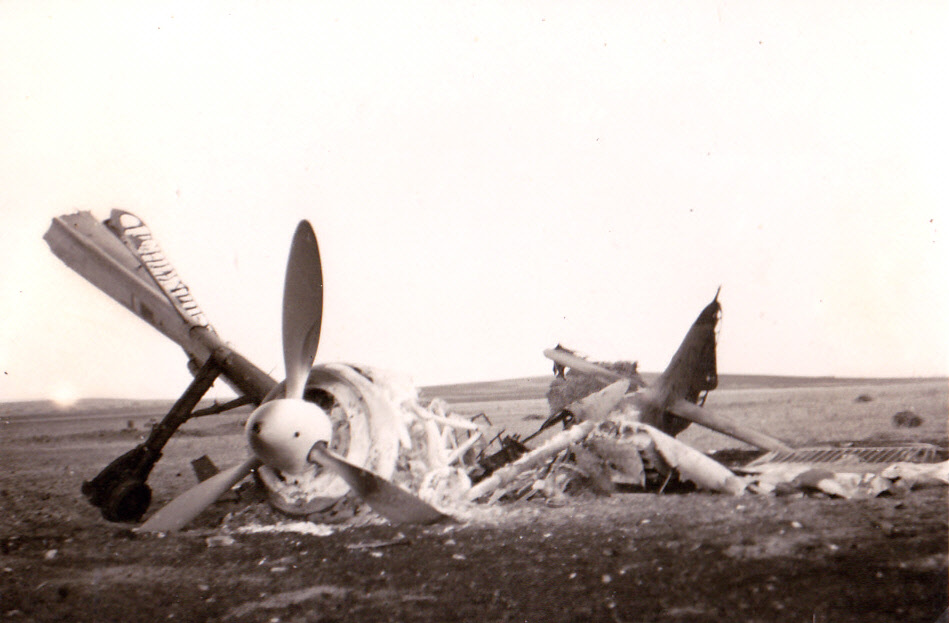
copyright 2014 Wilhelm Wenger and Carolyn Yeager
Translated from the German by Carlos Whitlock Porter
Notes from Poldi's brother, Willy Wenger:
The mission on 4 June 1943 was also Poldi’s last combat flight on the Channel coast and the letter to his mother dated 14 June 1943 was the last one from France, since he was transferred to Sicily on 15 June1943.
After the death of Hauptmann Frank LIESENDAHL, Oberleutnant Fritz SCHRÖTER took over command of the 10th Jagdgeschwader (Day Fighter Wing) JG 2 until 31 December 1942, after which Hauptmann Heinz SCHUMANN took over in April 1943 following SCHRÖTER’s transfer to Tunisia. In the meantime, the following name changes were made:
The 10th /JG 2 (Jagdgeschwader–Fighter-Bomber Wing) was renamed the 13th/ SKG10 (Schnellkampfgeschwader - Fast Bomber Wing) Squadron Commander - Lieutenant Poldi WENGER
The 10th /JG 26 and the 10th /JG 54 were renamed the 14th/ SKG10
Squadron Commander – Lieutenant Colonel Erwin BUSCH
The newly appointed 15th/SKG10 -- Squadron Commander - Lieutenant Erhard NIPPA
The three squadrons formed the Second Group (Gruppe) of SKG10, the name of which was changed, as of December 1942, over the course of a reorganisation of the close combat flier units, to SG10 (Schlachtgeschwader – Ground Attack Wing) --- Group Commander – Hauptmann Heinz SCHUMANN
Transfer to SICILY
Take-off on 15.6.1943 at 13h53 with stopovers in Bourges, Istres and Albenga (near Allassio, Italy) on 16.6. to Pratrica di Mare near Rome. After refuelling, off to Capodichino near Naples on 17.6 over the Straits of Messina and Catania to Gerbini-West.
Throughout the entire stretch of 2,270 kilometers, Poldi’s first maintenance engineer Thielen had to sit crammed into the baggage compartment directly behind the pilot’s seat and must have needed a lot of endurance to sit hunched up in this cramped compartment for hours.
Taking off from the foot of Mount Aetna, they flew the first dive bomber and high-altitude bombing attacks against large Allied convoys in the Mediterranean and achieved great results. They bombed harbor installations on the island of Pantelleria from a VERY high altitude. The whole group flew hard missions against Allied invasion troops, particularly around Gela, achieving the first tank kill and damaging several landing craft. -WW
___________________________
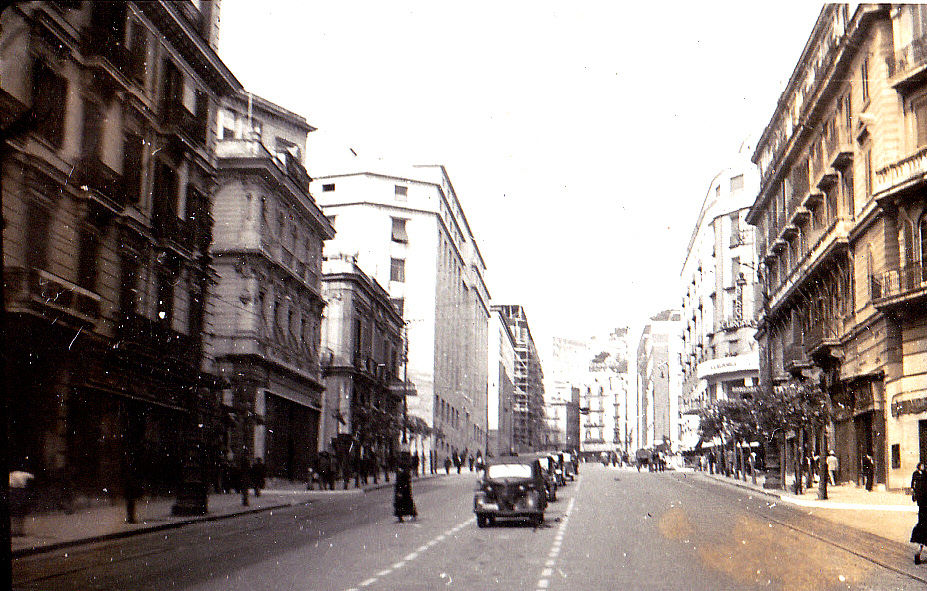
17 June 1943 : I’m now sitting at the foot of Mount Aetna. So I’ve really left the land of the great flesh pots now, at least temporarily. I have a wonderful journey behind me and I’ve already seen a lot of new and interesting things. I was able to see the Leaning Tower of Pisa from the air, even if only very briefly. In Naples, on the other hand, I was able to spend more time, lived in a first-class hotel there. I didn’t find it as beautiful as people always described it as being, though. Vesuvius, as usual, had its peak hidden in the clouds.
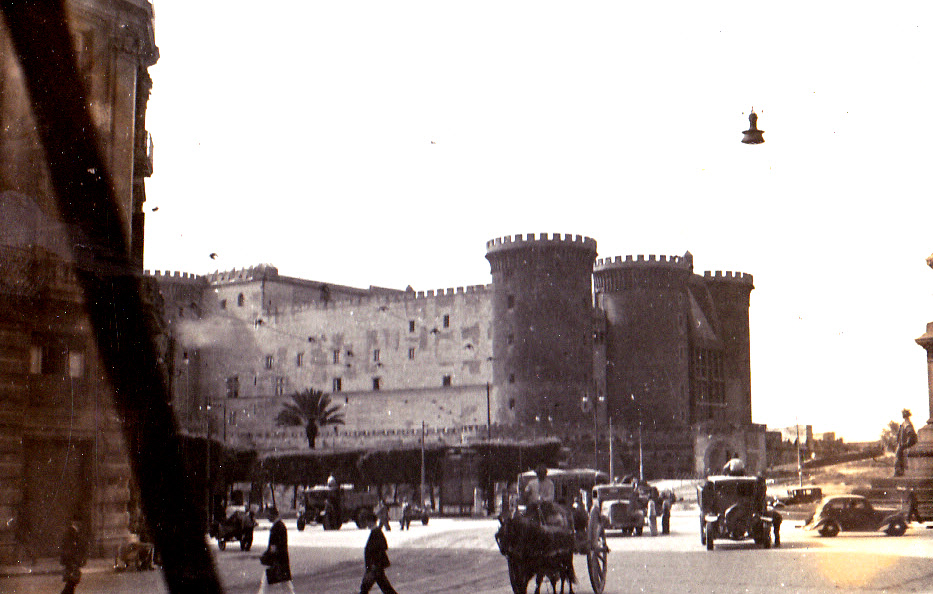
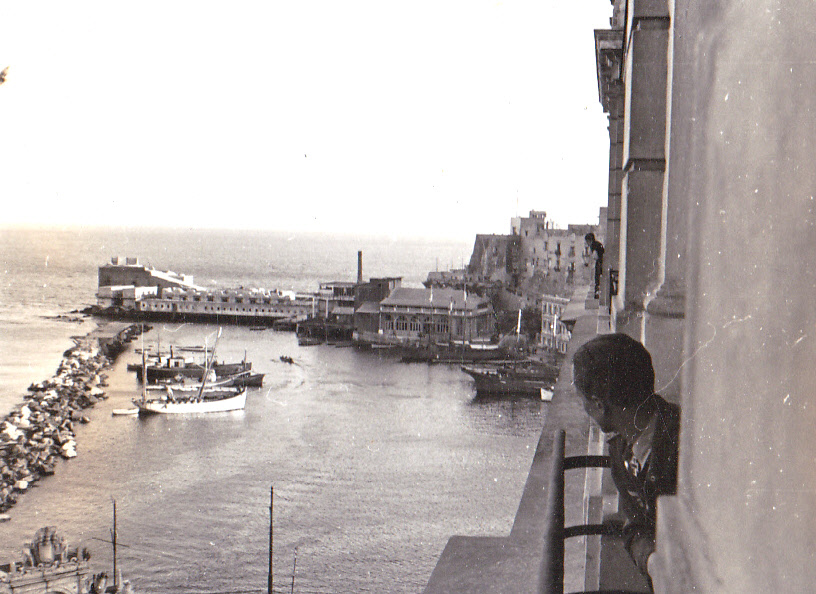
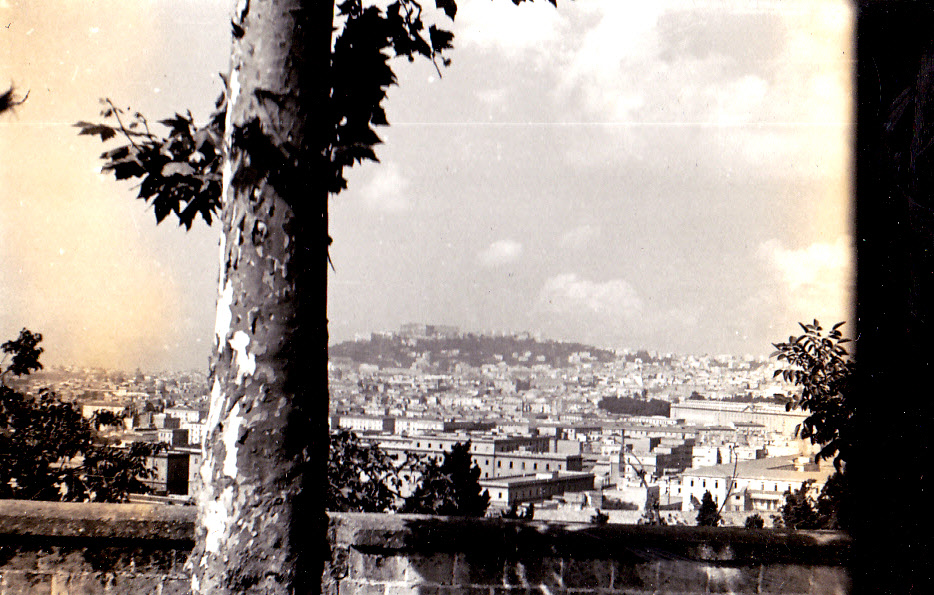
On the 15th, that is, yesterday, I flew from Caen to Bourges (310 Km). After lunch, around 14h53, I took off again and landed 490 km away in Istres. Along the way, I flew over the exact same spot where I smashed my plane to pieces in an emergency landing in a mountain meadow 7 months before.
Around 17h52, I took off from southern France over the Cote d’Azur and landed 262 km [away] near San Remo. The very next morning I was off again, along the Italian Riviera, past Genoa, and southwards along the boot, past Pisa, Grosetto, to Pratica di mare near Rome, where I landed at 11h53, after flying 523 km, after a 70 minute flight. Towards evening I flew back to Capodichino, near Naples, 180 km away, where I landed around 7h30 in the evening.
This afternoon, we flew from Naples to Gerbini West, where I landed after an 85-minute flight, a distance of 505 km, over the Strait of Messina and Catania.
So I got here yesterday, on the 16th. It’s Mom’s birthday today. I sent her my best wishes in a letter a few days ago, I hope she got to Gleichenberg safely.
It’s fiendishly hot here and, at the same time, people say it ought to be cool. Good job, we got light-weight tropical clothing. Nobody lives around here, for miles around. A good thing in a way, but there’s a water shortage. There’s nowhere near enough water for us. I live in a barracks in the middle of an olive grove, but I’ll have to move into a tent soon, since it’s too hot in the barracks.
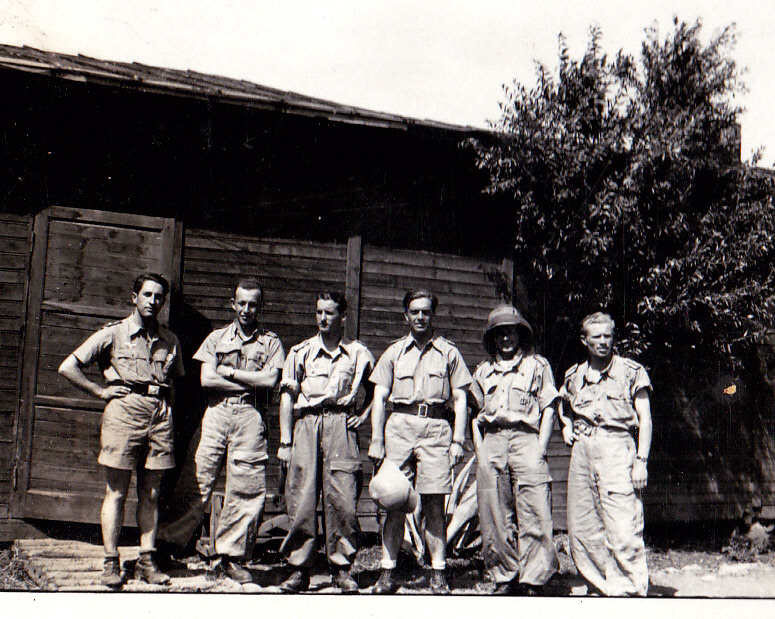
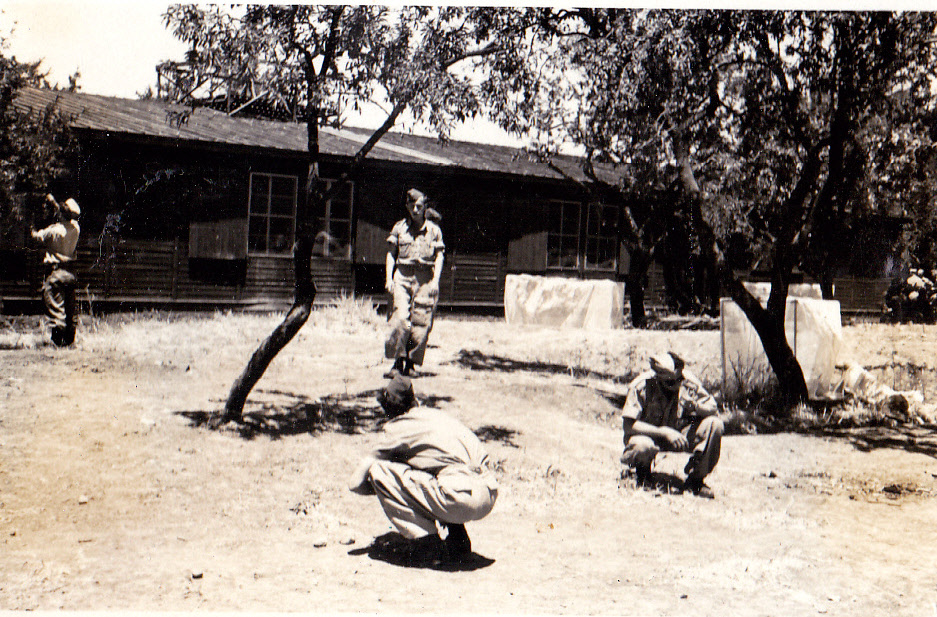
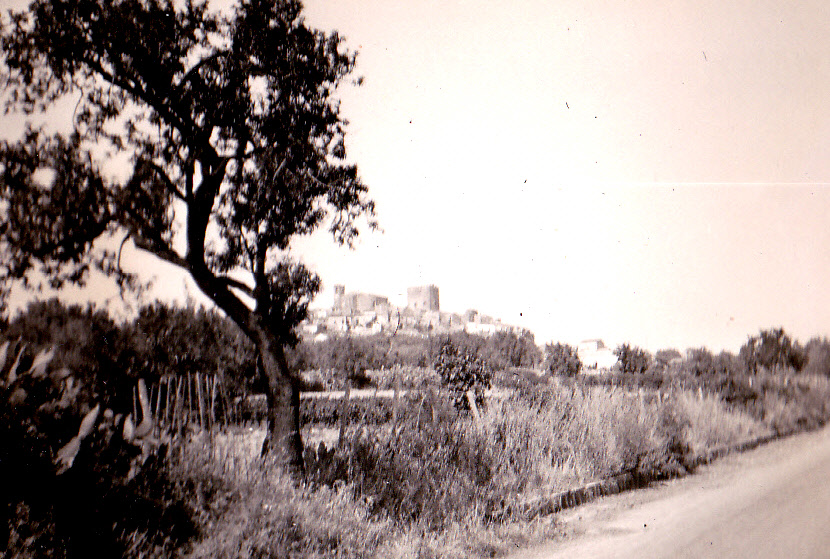
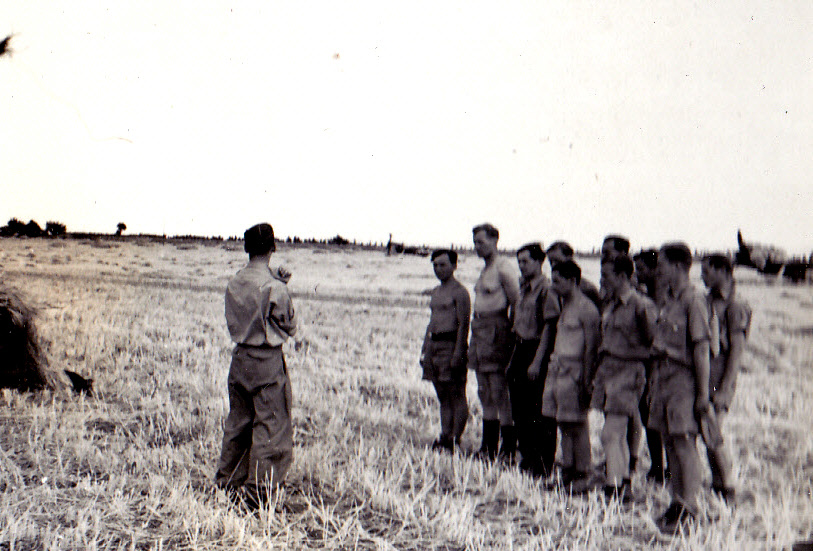
19 June 1943: It’s a little cooler in my little hut this afternoon. It’s monstrously boring for the moment. So here I am, sitting in my little shack in the semi-darkness, because if you went outside you’d get heatstroke. It’s dusty, too. The transition from the climate on the Channel coast to what we’ve got here was probably too sudden for me.
____________
[Transfer to another location always causes a few problems. If the whole unit gets transferred, the pilots don’t have so many problems, because they’ve got their planes there, right where they’re supposed to be. But the technical ground personnel have a harder time of it, who have to travel overland, which often takes days, by train or by truck. A pilot can’t fly without his maintenance engineers and mechanics—the availability of a maintenance engineer is the one single most important thing in keeping the plane in good condition and ready for action. That’s the alpha and omega of flying, so to speak. After the transfer from northern France to Sicily, though, it still took a long time for the ground personnel to get here. Of course, a new location almost always has some technical personnel from another unit, but every pilot swears by his own maintenance engineer.
So Poldi, without further ado, simply crammed his 1st maintenance engineer, Obergreiter Thielen—affectionately known as “Pipifax”—into the small luggage compartment behind his pilot’s seat, where he sat all hunched up throughout the entire duration of the 2,270 km journey. One would require the patience of a fakir to sit in this cramped position for hours. Fortunately, Poldi had already performed this experiment on a 300 km flight during a transfer from Caen to Coxyed. Later, in Sicily, Poldi took his 1st maintenance engineer with him in precisely this same way on all his transfer flights. -WW]
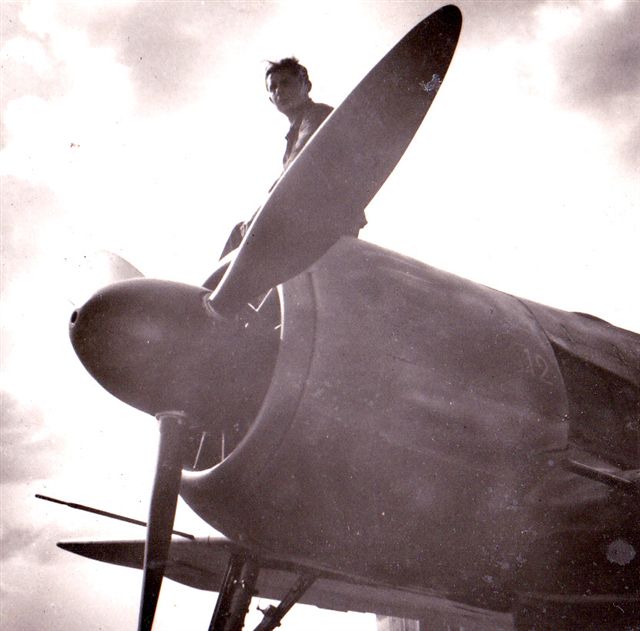
22 June 1943: The climate here is said to be worse than in North Africa. So it caught us all by surprise, in some cases with serious consequences. Some of us spend a lot of time in bed with fever and stomach cramps. I’m feeling better today. But I can’ t eat anything except cakes, chocolate and tea. I can’t keep anything else down. And this murderous heat is really enough to finish you off. It’s already 80 or 90 degrees in the plane. The first few times I felt faint as soon as I got out of my plane after flying. I know the island pretty well now. I’ve been getting around quite a bit. It’s barren, mountainous country; there aren’t this many savage, arid mountains even in the Alps.
Happily, I’ve just about gotten over my tropical staggers. I’ve gotten over my rubber knees and dizzy feeling since yesterday and I’m getting ravenously hungry. The heat hasn’t let up in the slightest and reaches incredible temperatures around noon, so that it’s impossible to leave the shadows of the olive and almond trees.
I flew my first mission here yesterday afternoon. We attacked an American convoy off the North African coast, off Cape Mostafa (near Bone) with everything we had. We were quite successful. I personally attacked a 7,000 British ton freighter, got it right in my sights and hit it hard. The flak was just like what you often see in the newsreels. So I saw the African coast yesterday for the first time. I also saw the Italian island of Pantelleria from the air yesterday.
29 June 1943: We were very busy again yesterday. Around noon I flew a reconnaissance mission in the Gulf of Tunis and towards Pantelleria, and in the afternoon we attacked the harbor and landing strip of Pantelleria with heavy forces. Again, it was a proud feeling for us when we saw nothing but our own fighters and bombers all around us. The English fighters kept a careful distance and did not attack us although we were flying very boldly.
And then all hell broke loose. We dove on our targets from a great height (5,000 meters) and hit all our targets. But the flak was very heavy and quite accurate. We got used to that a long time ago and we don’t let it bother us. I hope the English will land soon, so we can give them a good hiding.
8 July 1943: Once again I am able to say that we’ve just had another couple of exciting days. We got attacked from the air in a way you really can’t begin to imagine. They gave us no rest, either day or night. On 6 July, I took a direct hit in aerial combat with American fighter and bomber units and had to change planes. The next morning, as I was flying another mission, my good old plane was completely destroyed in a low-level attack on our position. My plane got burned, including my fur jacket. I’m back on the mainland now, in southern Italy.
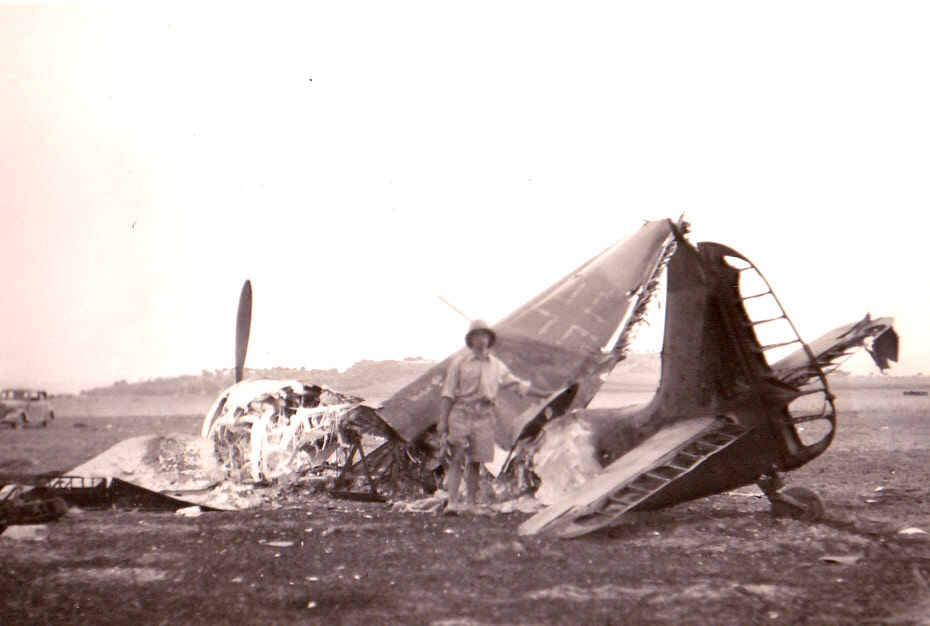
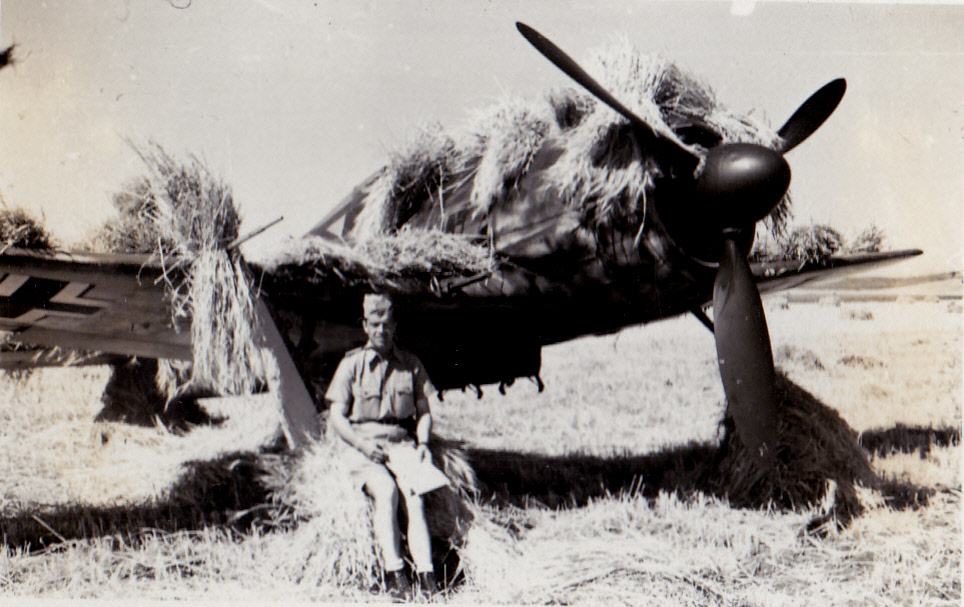
12 July 1943: (Marsa del Oro) We’ve been fighting all around the island for three days now! Our troops have been involved in heavy fighting and we are supporting them as best we can, with everything we have. We’ve been flying continuous missions against the Americans and giving it to them in the neck. This morning, once again, we tore hell out of an American tank column. It makes you feel good to think how much we’re helping our own infantry. I got hit hard, a direct hit, but got back to base safely despite everything. The English ground troops are getting worn down almost everywhere.
I’m quite glad to be back in good health. I had a beautiful tent camp built and I’m living there quite comfortably. I am very glad to get out of those miserable barracks. But the English air attacks have left things in a bit of a mess for the moment.
_______________________________________
[Among other things, one gathers from Poldi’s flight log book that he flew 4 missions on 7 July against Allied landing craft near Cape Muro, one of them towards evening near Gela, where the Americans succeeded in establishing a bridgehead. On 11 July, he flew 6 missions in the area near and around Gela, destroying the first tank, a railway bridge and shooting up units in the Straits, near Floridia. There was heavy aerial combat.
They were all flying again the next day, before 6 in the morning. The American landing parties were marching with heavy tank units from Gela in the direction of Ragusa. Light anti-aircraft guns were firing heavily. The second attack took place at 8 hours against vehicles in the railway station at Vittoria, during which his plane received 3 direct machine-gun hits. After all these attacks there was repeated aerial combat against Spitfires and Lightnings. Poldi lost his FW 190 when it was destroyed by American low-level fliers on 12 or 13 July.
The Allies were advancing with such superior numbers that they were gaining ground very quickly, despite heavy defensive action by German and Italian units. American air superiority was very hard to deal with and the bombardments went on around the clock. So the order came to vacate the island on 13 July. Poldi must have already been on his way to Munich by this time, where he had to remain for several days (presumably because of bad weather). He appears to have been given a new fighter plane at around this time. -WW]
________________
17 July 1943: I visited the House of German Art yesterday and wandered around town a little bit. My lodgings in the “Bayrischer Hof“ Hotel are perfectly magnificent. But I’ve already got to go back down south this afternoon.
20 July 1943: My beautiful days in Munich are over. I took off from Munich on Saturday, 17 July and flew over the Alps with very good visibility. I also got good views of Innsbruck, the Brenner Pass, and Bozen from the air. When I got to my destination, I was having pain in my left knee. It soon got so bad that I couldn’t sleep, so I went limping to the Doctor late in the afternoon.
But he couldn’t tell me much about what was wrong, so he bandaged it and ordered me to go to bed and rest. Today, my leg, from the foot to the knee was so badly swollen that I could no longer straighten my leg. I can no longer walk except by hopping on one leg. Nobody can tell me what’s wrong. Now they want to send me to a military hospital in Rome. And all this at a time when every man is urgently needed!
Last night I went through what was the toughest and most violent air attack I ever experienced. Hopping on one leg, I managed to reach a rubbish pit where I dug myself into the rubbish and filth as best I could with the help of an old tin can I found. The bombs were dropping so thick and fast all around me that I had the impression that I could no longer hear them when they hit the dirt nearby; rather, I could only feel the tremendous, appalling shock waves churning the air. I got thrown into a stone wall. When it was all over I looked like a pig and stank like mad; my clothes were torn completely to pieces, and I was covered with cuts. Of course, this wasn’t so good for my foot, either.
Now I’m lying in bed and hope the shamans can fix me up soon so I can be back in action. I’m waiting for the mail and feeling increasingly impatient. I hope it hasn’t all been destroyed.
__________________________________________
[Poldi told me that it was unbearably hot in the cockpit, so he had his technician install a small ventilation flap, enabling him to regulate the amount of fresh air by means of a small slider. This must have had the effect, however, of exposing the knee to too much cold air, causing his disability.
A telegram caused some confusion in the family. The telegram confirmed that Poldi had been confined to a military hospital in KONSTANZA, which, as everybody knows, is on the Black Sea. It was a mistake in the address, and it soon turned out that he was in Constance, on the Bodensee. -WW]
_____________________________
In the military hospital at Konstanz am Bodensee
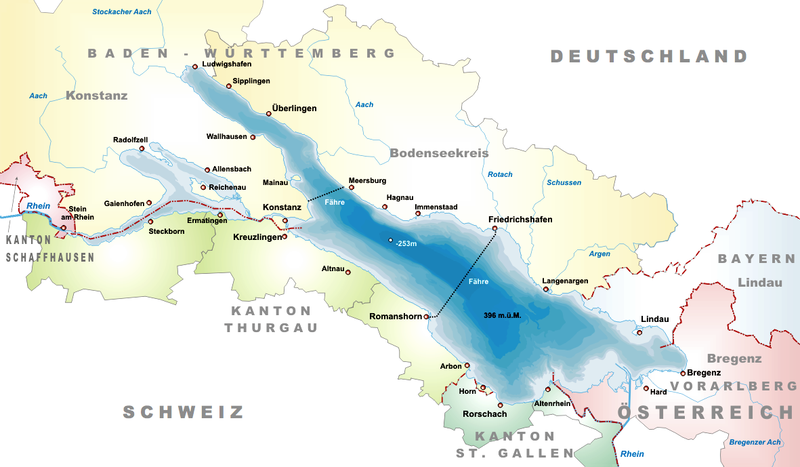
28 July 1943: After a short stay in the military hospital in Rome, and after an aspiration of the joint, I was put on a hospital train to Germany and ended up here, in Konstanz. The 48-hour journey was horrible and I’m glad to have a little peace here. The pain has eased somewhat, except that the leg is still very badly swollen all the way up to the knee, and I can hardly move.
Otherwise, it’s quite beautiful here, but for the time being I won’t be able to see much of it. I’ve got a double room with a lieutenant, but I’m alone a lot, so I get a lot of rest, which is what I need.
1 August 1943: Not much has changed in my situation. I’m still lying in bed with a splint on my leg, and underwent aspiration of the joint day before yesterday, for the third time. I’ve had all sorts of medications and injections Every time I ask the head doctor what’s wrong with me, he shrugs his shoulders and says I must wait a while and leave my leg alone, don’t strain it, but let it rest. And in actual fact, when I lie perfectly still, I don’t feel any pain at all, only I mustn’t touch the knee or even bend it. I can get up but I can’t use my left leg for anything.
So I’ve been lying here in my hospital bed for days, and every day is like every other: breakfast at 6 hours, then it’s visiting time. Around 10 hours we get something to eat again, and 12 hours it’s lunch, after which my roommate leaves the hospital to visit his family, who live around here; he only gets back about 22 hours. He got shot in the pelvis and he’s been here six months and is now allowed to walk a little bit.
The monotony is broken by a snack in the afternoon and dinner around 18 hours; then comes the endless night. I can hardly sleep. So I doze until morning with the help of a few morphium injections. And then it starts all over again: lying still, eating, drinking, and doing nothing. I don’t think I’ll be able to stand it if this goes on much longer. I already told the doctor that. In the meantime, it’s magnificent summer weather outside. Grumbling won’t help, though. When I get out of here, I’m sure they’ll give me a few days off to see my family.
It would be nice if somebody from the family could come visit but it’s probably too inconvenient at this time. It must be rather difficult to find a place to stay around here, because so many families have moved here after being bombed out, to find a new place to live and escape the bombings. –I just talked to a nurse. She could find a room for my family for a few days, she would just have to know when they were coming with enough advance notice.
5 August 1943: I fought a very successful defensive action today. The doctor wanted to put a plaster cast on me, but I started talking and getting a little bit mutinous, until he saw that a split would be just as good, even better, in my case.
Since I’m alone most of the time, I managed to get a radio today, which helps me pass the long days. I’m very dissatisfied with myself, so much so that I could kick myself. It’s all because I have to lie around all the time. I tried to sleep through the night without sleeping medication. It was bad; every ten minutes I was fully awake again. I think the longer I lie here the worse it will get. For the moment, I’m trying to get in touch with my unit again. But I haven’t been able to get through so far. I ought to try to get transferred to a backup unit, but that’s no good for me. Thank God I’ve got good connections, that ought to help me get back to my old unit.
11 August 1943: Willy arrived here safely and he seems to like it a lot in Konstanz. Despite his telegram, I was very surprised that he was still able to make it here, even it was 22 hours. So he’s visiting me every afternoon. I’m also feeling better after my throat inflammation, although I could hardly talk to Willy. The suppuration from my knee joint has abated somewhat. The only thing the doctor won’t let me do is get up. But I hope it will all be over soon.
There’s no question of a transfer to Gleichenberg for the moment, since it takes at least three or four weeks for an application to be processed. I hope to be fit to travel by then, so as to be able to drive to Gleichenberg for my last outpatient treatment. That would help me get out of the military hospital as quickly as possible.
16 August 1943: I just learned that I’m going to be transferred to a Luftwaffe military hospital as soon as I can travel (without assistance). So nothing has come of Gleichenberg. I’ll have to choose between Nuremberg and Munich. I do a little bit of exercise in bed; chest expander, throwing a 5 kg medicine ball around, and so on. So my flabby muscles are getting back in shape again.
18 August 1943: Well, on top of everything else, now I’ve got jaundice! Now I’ll have to lie here even longer!. But I’m doing all I can to get well again.
4 September 1943: For a few days now, when nobody’s looking, I’ve been trying to bend my leg again and take a few steps. I’ve made a lot of progress very quickly, and today, the doctor told me I could try to get out of bed, very slowly and carefully, and sit at the table. I would have laughed if he’d only known! – Now I’m sitting here at the table like an old grandfather and I ate my first meal at the table today!!! I’ve been told that my jaundice is all over now. I almost jumped out of bed from sheer joy. It’s really something to be able to get out of bed again after almost 7 weeks. Of course, I can’t do anything with my leg yet, but I’m very glad to have made as much progress as I have.
6 September 1943: I’m hobbling around the countryside on crutches now. Of course, I’m not supposed to leave my room, but I already wandered around the military hospital a couple of times. I want to see the park first, and I’m very happy to be able to be outside. Hope the weather stays like this. The fall colors are slowly making their appearance.
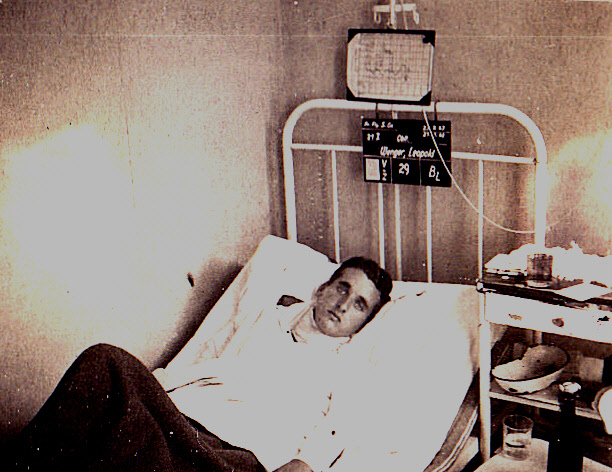
10 September 1943: Hopefully Mom will soon have recovered from the hardships of the long journey (Leoben-Konstanz and back). I’d like to hear how she liked Munich. I can easily imagine that the visits were tiring in such a short time.
My leg is gradually getting stronger. Today I tried to stand on just one leg, the bad one. I could only hold the position for a couple of seconds, then my leg got jumpy. Now I’m walking around on one crutch, in order to strengthen the weak leg by main force. I still can’t move my knee, but what I can is enough so I can sit in a plane!
I still don’t know when this will be all over, but I hope, very soon; I might get straight out of here, without having to stay in a Luftwaffe military hospital. Nobody knows exactly. I’ve got a new doctor now. I left the military hospital this afternoon to walk around in the park for an hour (with one crutch). It wasn’t as easy as it looked at first. But it was wonderful anyway, just to see the sky after so many weeks house arrest.
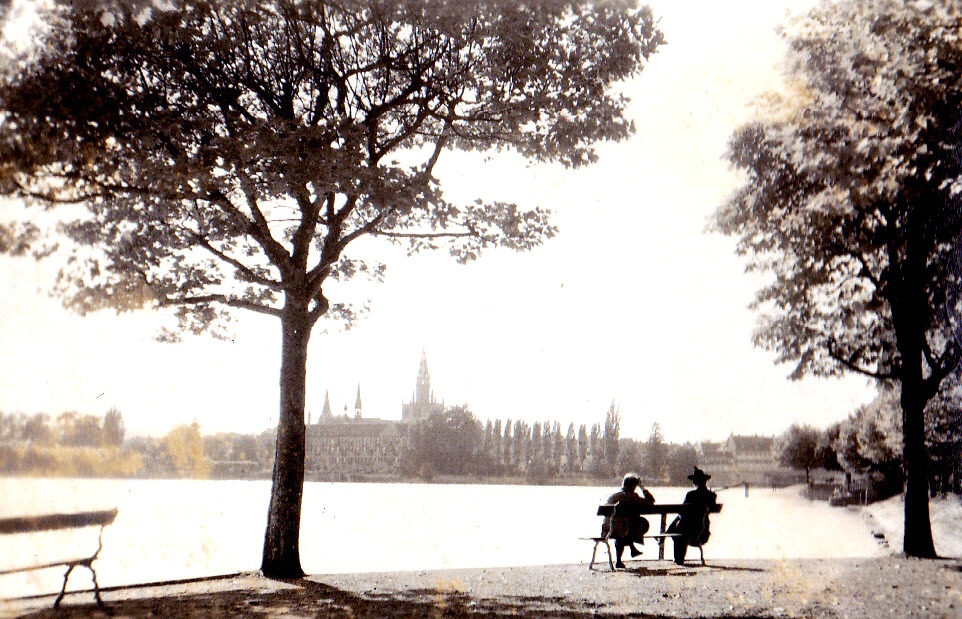
16 September 1943: I’m feeling very well by now. I wanted to see the shore of the lake for once, yesterday evening, but I got lost and suddenly ended up at the Rhein Bridge and saw the town for the first time. It was a bit difficult on crutches, and I’ve got enough calluses and blisters on my hands to prove it.
Despite it all, I was right back outside this afternoon. The little town was just as beautiful as Willy had described it to me. Unfortunately, I’m not making any more progress with my knee. But I hope that I’ll soon be strong enough to be discharged, on my feet and even with a stiff knee, since I’ve had enough of being laid up. I’m getting another room mate tomorrow.
20 September 1943: I got the three little packages just today, the cakes were a little bit moldy after the long journey, but that’s all right. My appetite is as good as ever and I eat tremendous amounts every day. The last time I got weighed, I weighed 56 kilos again. I always get extra portions from the kitchen. People have noticed what a huge appetite I have.
My knee is already worrying me a lot, though. I’m getting short wave radiation treatment now, and a black ointment on it at night. In the morning I get a hot bath first thing, then hot air treatment and finally short wave radiation treatment every other day and underwater massage twice a week. I’m also exercising quite diligently. I’ve actually gotten much stronger; I notice that during my daily chest expansion exercises.
I’ve already been to the lake a couple of times and caught a hearty cold from it. In the meantime I’ve got a new room mate; he was on the Eastern front and is from Konstanz, so he’s at home here. This evening we both want to go to the cinema to the see the “Münchhausen” film, which is in color.
22 September 1943: My pullover finally got here. I got a lot of mail today, all addressed to me in Sicily. Letters from June and July.
To be continued ... Officers Hospital in Vienna and then to Lemberg (Lviv)
- Printer-friendly version
- 3864 views