

I LIKED THIS ARTICLE in the March 3, 1915 issue of THE FATHERLAND because of the overview it provides of English outrages against any competitor or source of wealth that presented itself. It puts the Great War into perspective very well, but is a bit too optimistic as to the hoped-for outcome. At this time, the United States was still seen as the fair-minded uninvolved arbiter, a role it totally failed to fulfill in this war, and the next. -Carolyn
v. 2 no. 4 March 3, 1915 Page 11
ENGLAND AND PROVIDENCE
By Dr. Edmund von Mach
NATIONS, like individuals, are the tools of Providence. We may think we understand the reasons of our actions, but we do not know the aims of Providence until the results are achieved.
The thirteen American colonies thought they knew why they revolted against England, but what they thought is rarely remembered, while the purposes of Providence, who wished to establish political freedom in the world, will be known in eternity.
The French commune was swayed by hatred and revenge but Providence wrote equality large across the pages of the French Revolution.
The American North and South fought over the right of secession but Providence turned the war into one for the abolition of slavery.
What is today the great wrong among the nations that must be righted? It is the assumption that one of them has prior rights above all the others. England's conduct of the war has shown that she still regards the seas to be her property which others are permitted to sail only on suffrance. The fight has lasted less than a year, and already England's dream of world dominion is shattered. Her pleasant conceit that she can oppress people, big or small, black, white or yellow, in any corner of the globe, and can yet play the part of the protector of the small nations, has been pricked like a bubble. In the past she has maintained her position by fight and intrigue. In the future, she will have to work on equal terms with all the rest.
The veil of conceit will be torn from her face, and the world will know her as she is. Actions speak louder than words, and England has tried to make a South African concentration camp of the whole of Germany!
In attempting to do this she has followed the preachings of her leading men. Nowhere has the doctrine that might makes right been so assiduously preached as in England and especially in a book addressed to the laboring men of England in 1905. The following passages are taken from “The Peace of the Anglo-Saxons” by Major Steward L. Murray, Watts & Co., London:
Lord Roberts wrote a preface to this book and said: “I have been asked to write a short preface to this book and I do so with pleasure.”
Some of the sentiments to which Lord Roberts subscribed are these:
“It cannot be too clearly stated that international law is protection except to the strong, and that the only laws which great powers recognize as binding are those of power and expediency.” (Page 44) “The worst error in war is a mistaken spirit of benevolence. ... It was not in such a spirit of weakness that we wrested the command of the sea from the Dutch, that we fought the great struggle against Napoleon, or seized the Danish fleet at Copenhagen in 1807 to avert its possible use against us.” (Page 48)
The question is “Who will have the supremacy …? To share and agree is impossible.” (Page 81) “let us, therefore, make up our minds once and for all that we will be supreme upon the sea, cost what it may, and let us get to work at once. Let us add at once another 5,000,000 pounds yearly to our shipbuilding programme and recoup ourselves from the foreigner, and if necessary, from futurity.” (Page 168)
“If one nation yields to another nation, such weakness only encourages its opponent to play the same game of threats again.” (Page 39) “Instead of listening to the unpractical nonsense of those who hold forth about the wickedness of war, let us regard war as it really is—as an inevitable event in the life of each generation.” (Page 40) “Russia interprets international law simply as it pleases herself, without the slightest reference to anybody else's opinion. And so will every other belligerent who is strong enough.” (Page 44)
Of the surprise of Denmark by Britain in 1807, Major Murray, with the approval of Lord Roberts, has this to say (page 79):
“The reader will find a most clear and lucid account of this operation in General Sir Frederick Maurice's book, 'Hostilities Without Declaration of War' from which I abstract the following: 'In 1807 we were at complete peace with Denmark. Early in July, Mr Canning, the Prime Minister, became aware through his secret service that on June 25, at the famous interview on the raft in the Niemen between the Czar Alexander and Napoleon, they had agreed to force Denmark to put her fleet at their disposal against England. On July 26 our fleet sailed from the Downs. In the words of the Danish Declaration: “The Danish government saw the English ships of war upon the coast without even a conjecture that they were to be employed against Denmark. The island of Zealand was surrounded and captured, the capital threatened, and the Danish territory violated and injured before the Court of London had made use of a single word to express the hostility of its feelings.” In a time of peace we surprised a friendly nation, landed an army, bombarded the capital, and seized its fleet and all its naval stores which we carried away to England.' I quote this instance without comment, to show how utterly unconventional, even if necessary and expedient our action was. Nothing has ever been done by any other nation more utterly in defiance of the conventions of so-called international law. We considered it advisable and necessary and expedient, and we had the power to do it; therefore we did it. Are we ashamed of it? No, certainly not; we are proud of it.”
This is England! She has always been thus.
She was the same when she fought Spain, Holland, France, and the United States for their commerce; the same when she drove the people of Acadia to starvation, excited the savagery of the Indians against the American colonies, blew her captives in India from the cannon's mouth, devastated and desecrated Egypt in the River war, and sowed death and destruction in South Africa. Is she ashamed of it? No, certainly not; she is proud of it!
She is the England who deems herself an aristocrat among the nations, and dreams of supremacy. But though she has used Belgium as a buffer, and today prides herself that she can fight this war with silver bullets, while others spill their red warm blood, her days are numbered. The fate of Sodom and Gomorrah was not more terrible than the fate that is in store for London, if she does not repent and change her ways.
You cannot set out to starve a whole nation, men, women and children, and live. [I believe he's referring to the current English blockade of Germany here -cy] The England of Lord Roberts, Winston Churchill [1st Lord of the Admiralty], Lloyd George and Sir Edward Grey will die. After this war there will be no aristocracy among the nations. All will stand on an equal footing.
Long after the details of the present war are forgotten, when friendship reigns again among the peoples of this world, and someone asks: What did the nations fight for in 1914? the man who knows will reply: Germany fought to break down the outworn order of things. America and France had fought and suffered, a century and more before, to establish the right of freedom of the individual. Germany fought to secure the right of freedom and natural growth of nations. She suffered much, but she won for the world justice and liberty, and established among the nations what had long been in force among individuals—“the efficiency test of superiority!”
________________________________
I've included the next contribution simply because I think it's so much fun and so accurately portrays our human psychology. It gives a pretty good history lesson, too.
v. 2 no. 6 March 17, 1915 Page 5
“How Fears & Prejudices Alter People's Mental View of the war” (excerpt from THROUGH A GLASS DARKLY) by Professor Hugo Munsterberg
[...]
They cannot help underscoring the data which fit into their argument and ruling out the disturbing facts, if a point of view can be found from which they become invisible. My friend from the other side and I discuss the nationality of Alsace. I am so proud of my German Alsace which I love and am so delighted with its thoroughly patriotic German attitude during this war. How could it be otherwise, as every soldier from Alsace was born under the German flag? Alsace has been German as long as anyone who went with his regiment can remember. But my friend claims Alsace is French because it was under the French regime fifty years ago and a hundred years ago and two hundred years ago. That is, he claims Alsace was always French. But does he not know any history? What do those two centuries under the French regime mean? Alsace was always German. When Louis XIV tore it away from the German people, it had been thoroughly German since early medieval times. What did the short French rule mean compared with a thousand years of German national life? His fact is that Alsace was always French, and mine that Alsace was always German. I ignore the little episode of foreign rule which surely has not broken the thoroughly German language and tradition of the Alsatian farmer, and he ignores whatever passed before the French grasped it, because he thinks two hundred years are enough to look backward. We both are right. And where did this war start? The German might say: With the Russian mobilization. The Russian would answer: No, before, with Austria's sharp ultimatum to Servia. But the Austrian would reply: the war began with the assassination of the archduke. The British would insist: It began much earlier with Germany's new fleet programme. The Germans date it back to King Edward's encircling policy which welded all Europe together against Germany. The French would say: On the contrary, it began with Bismarck's taking Lorraine. And Germany shouts: Napoleon. And Europe says: Frederick the Great. And Germany trumps: Louis XV. Yet that is all superficial. Charlemagne had a most important influence on it. And if you say: No, the real trouble began with the great migration in the fifth century, it may be true; and yet I think the beginning was much earlier. Facts become facts by our selection.
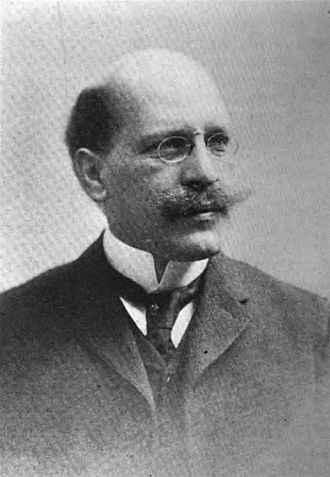 Born in Prussia, Hugo Munsterberg was considered by many to be the most prominent German-American academic in the U.S. and was an early contributor to THE FATHERLAND. From Wikipedia: “Münsterberg's support of the supposed efficiency and modernity of the German autocracy caused him to be suspected of being a German spy, and many of his more liberal Harvard colleagues disassociated themselves from him. There were also threats against his life. He remained at Harvard as a professor of experimental psychology and director of the Psychological Laboratory until his sudden death, possibly due to stress, in 1916 while on a lecture platform.
- 1092 views
Comments (3)
Just wait, in few more
BillJ318
Just wait, in few more decades, ethnic British will be a minority in their own country. Third world immigrants do not assimilate well despite what people believe, and the British propensity for treachery and causing havoc in the rest of Europe will die out right along with them.
British Hunger Blockade an atrocity
carolyn
http://www.culture-clash.net/pages/war/war_articles/I1hunger.html
Thanks to Marge O'Brien for posting the link to this article at another website. It's very hard for me to read (I had to take a break from it which I'm on now) because of the horrible suffering and damage inflicted on German women and children due to the illegal British blockade. What makes it worse is that Germany HAD NOT ASKED FOR THE WAR, but England had! That's the truly disgusting part. Here are a few excerpts from the article by Ralph Raico:
Seldom ... can the consequences of such an effort [to prohibit international trade] ... been as devastating as in the case of the ... British naval blockade of Germany in the First World War. This hunger blockade belongs to the category of forgotten state atrocities of the twentieth century.
________________________
This was ... "the starvation policy" directed against the civilians of the Central Powers (particularly Germany), the plan that aimed, as Winston Churchill, First Lord of the Admiralty in 1914 and one of the framers of the scheme, admitted, to "starve the whole population--men, women, and children, old and young, wounded and sound--into submission."
__________________________
The British quickly began to tighten the noose around Germany by unilaterally expanding the list of contraband and by putting pressure on neutrals to acquiesce, particularly the Netherlands, since more than any other port, Rotterdam was the focus of British concerns over the provisioning of the Germans in its violations of the rules. In the case of the major neutral, the United States, no pressure was needed.
____________________
In June 1915, bread began to be rationed. "By 1916, the German population was surviving on a meager diet of dark bread, slices of sausage without fat, an individual ration of three pounds of potatoes per week, and turnips"; and that year the potato crop failed.
____________________
Four long food lines were inspected with the closest scrutiny. But among the 300 applicants for food there was not one who had had enough to eat for weeks. In the case of the youngest women and children the skin was drawn hard to the bones and bloodless. Eyes had fallen deeper into the sockets. From the lips all color was gone, and the tufts of hair which fell over the parchmented faces seemed dull and famished--a sign that the nervous vigor of the body was departing with the physical strength.
______________________
Vincent places the German decision in early 1917 to resume and expand submarine warfare against merchant shipping--which provided the Wilson administration with its final pretext for entering the war--in the framework of collapsing German morale.
This was the very same policy - to destroy public morale - that Winston Churchill carried out in the 2nd half of the Great War -- commonly known as WWII. Is this how wars are fought?? The British could never win by actually fighting the German Army; they had to come up with unmanly ploys like this.
Asking "how did they get away with it?" -- my answer is their dominating "place" in the world and their carefully crafted reputation. Plus the spread of the English language all over the world. Maybe some readers have other ideas.
P.S. In returning to the article, it turns out that the rest of it is useless speculation on whether the starvation turned Germans into numbed-down, bitter Nazis, and naturally I do not endorse that. So I recommend only the first 2/3 of the article. The rest just goes to show the deep level of prejudice that exists against Germans based on war propaganda lies.
Works by Von Mach
carolyn
There is what looks like everything Edmund von Mach wrote in English on his page at Internet Archive. Quite a lot. A few days ago I read his short book "The Art of Painting in the Nineteenth Century" and thought it was very good. Now I'm reading "What Germany Wants." He is a very agreeable person who wants to bring about tolerance and understanding. He loves America, came here at age 21. In 1915 he was 45.
I learned he has a strong marriage relationship with an English woman whose family dates back to the Mayflower, who he writes is a "Lover of Truth and therefore convinced of the Justice of the German Cause." What quarrels she must have had with her family!!!