

Home
Carolyn Yeager
Now Retired but Still Readable

Main menu

  • Home
  • Welcome
  • About
  • Contact
  • Kriessmann Archive (opens in new tab)
  • Donate

Breadcrumb

  • Home
  • Donald Trump is our Andrew Jackson

Radio Archives

  • The Heretics' Hour
  • Saturday Afternoon
  • "Hitler's Table Talk" Study Hour
  • "The International Jew" Study Hour
  • Wehrmacht War Crimes Bureau
  • The Revisionist Report
  • Other Podcasts
  • Problems Listening?

Click here to go to Elie Wiesel Cons the World

Elie Wiesel Cons the World

Popular Articles

The Fake Legends of Adolf Hitler’s “Jewish Grandfather”
Views: 180,963
How many times does it have to be said? Hitler didn't have dark hair.
Views: 82,332
"Why We Are Antisemites" - Text of Adolf Hitler's 1920 speech at the Hofbräuhaus
Views: 71,064
Hans-Ulrich Rudel: The man who might have been the next German Führer
Views: 67,338
The Search for WWII Mass Graves
Views: 53,600
The Solutreans - First Americans May Have Been European
Views: 46,934
Auschwitz: The Underground Guided Tour
Views: 44,462
The Gleiwitz “False Flag” Incident is Pure Fiction
Views: 41,959
Known Pedophile is Instrumental in Promoting Holocaust Hoaxer and Plagiarizer Denis Avey's New Book
Views: 40,721
Meltdown for Tanstaafl
Views: 35,299
The Case Against Denis Avey, the BBC, and the British Government
Views: 27,127
Gerhard Ittner may seek justice from UN Human Rights Committee
Views: 26,155

The White Network

Click here to buy my book, Auschwitz: The Underground Guided Tour
Read this book

The Scriptorium

Donald Trump is our Andrew Jackson

By carolyn | 2:56 PM EDT, Tue October 04, 2016

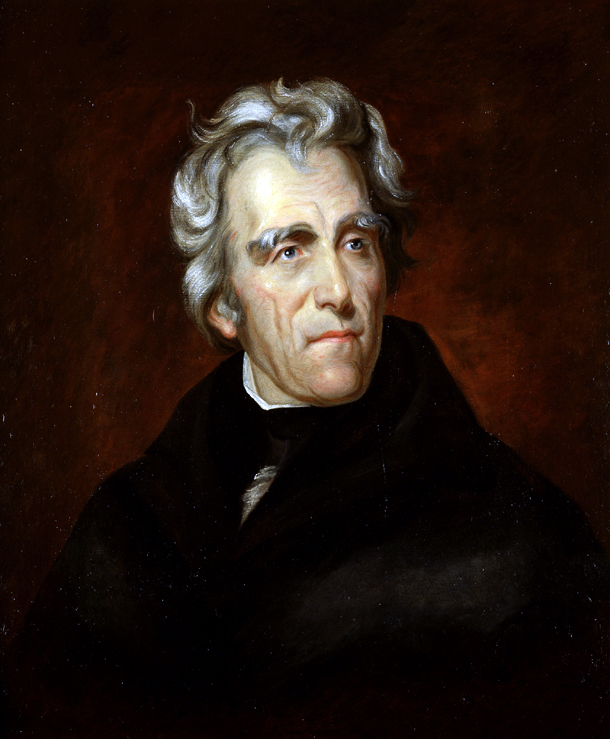
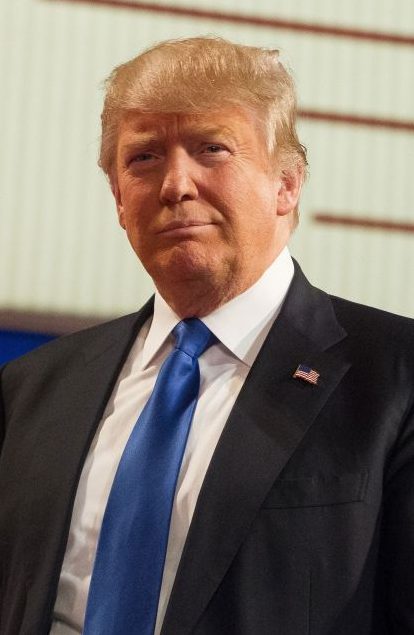
Andrew Jackson was elected President of the United States of America in 1828; Donald Trump will be elected 188 years later. What similarities do they share as political figures?


By Carolyn Yeager

FORGET RONALD REAGAN. TRUMP IS BIGGER AND BOLDER in his views and potential as a change-maker than our 40th president ever was. If elected, Trump will be equal to no less than our 7th president, the great Andrew Jackson.

I am not an expert on all the details of US history, but over the years I've come to appreciate Andrew Jackson to the point that I call him my favorite president. He was an interesting individual, and I like that he fought so hard for the people against the vested interests of the time, which were basically the same as now. I like that he put the American people, his people, first. He is nowadays condemned for the so-called “Trail of Tears” forced Indian relocation, and American schoolchildren are taught to see him as a terrible president for that reason. But I think he had his priorities straight in protecting his own people.

Andrew Jackson was a very polarizing political figure during the 1820s and 1830s. He served two terms from 1829 to 1837. To say Jackson was known as a fighter is an understatement. After being elected to the U.S. Senate as a Democratic-Republican, his supporters founded the Democratic Party, the one that still exists today although greatly changed, and he became the first president of the Democratic Party.

In like manner, Donald Trump is in the process of creating a new Republican Party, for which he has attracted the absolute enmity of many Republican establishment figures. If he is elected, he will be the first president of this 'new Republican Party.'

As a Tennessean, Jackson supported states' rights and the extension of slavery into the new western territories. As mentioned above, he forced the relocation of certain Indian populations in the South to reservations in the farther western part of the country because they couldn't co-exist peacefully with the European Americans. He fought mightily against the vested interests of the time in the form of the Bank of the United States (think Federal Reserve Bank today), and won.

A New Yorker, Trump wants to give control back to the states and localities in several key areas, such as education and health care - rolling back government by Washington DC fiat. He wants to re-energize and clean up black communities by making educational choice available and enforcing law-and-order. He strongly supports the police and all law-enforcement agencies. He wants to deport criminal aliens and stop the flow of human and drug traffic across the southern US border. He wants to end the overwhelming influence of special interests, corporate donors, and “pay for play” in all branches of the government.

To butress my headline claim, I have gone over the Wikipedia page for Andrew Jackson, which is pretty long, and gleaned from it what I see as other similarities between the two men.

Election of 1824

A Pennsylvania convention nominated Jackson for President. Albert Gallatin, the vice-presidential candidate on an opposing ticket, criticized Jackson as altogether unfit for the office." There were four candidates: Jackson, Wm. Crawford, John Quincy Adams and Henry Clay. Though Jackson won the most popular votes and a plurality of electoral votes, the election was decided by the House of Representatives, which chose Adams.

Jackson supporters denounced this result as a "corrupt bargain" because Clay gave his state's support to Adams, who subsequently appointed Clay as Secretary of State. Many voters believed the "man of the people" had been robbed by the "corrupt aristocrats of the East." [a rigged system]

Election of 1828

Jackson revived many of the ideals of the old Republican Party, gave it a new name as the Democratic Party [Trump seems to be doing the same, but the other way around], and forged a national organization of durability. Jackson, with John Calhoun as his running mate, handily defeated Adams in 1828.

Both candidates were rhetorically attacked in the press, which reached a low point when the press accused Jackson's wife Rachel of bigamy. Jackson also came under heavy attack as a slave trader who bought and sold slaves and moved them about in defiance of modern standards of morality. (He was not attacked for merely owning slaves.)

Presidency 1829-1837

"The Age of Jackson" shaped the national agenda and American politics.

Jackson feared that monied and business interests would corrupt republican values. When South Carolina opposed the tariff law he took a strong line in favor of nationalism and against secession.

Jackson believed that the president's authority was derived from the people. When selecting his Cabinet, instead of choosing party favorites, Jackson instead selected "plain, businessmen." 

Jackson was the first President to invite the public to attend the ball honoring his first inauguration. Many poor people came to the inaugural ball in their homemade clothes. The crowd became so large … the White House became so crowded with people that dishes and decorative pieces inside were eventually broken.

Jackson's raucous populism earned him the nickname "King Mob." Similarly Trump is accused of arousing a destructive, anti-democratic  populism.

The “Petticoat affair” – Salacious rumors spread that the wife of Jackson's Secretary of War, John Eaton, had been sexually promiscuous, or had even been a prostitute, as a barmaid in her father's tavern. The Cabinet wives insisted that the interests and honor of all American women was at stake. […] The upshot was a total revamping of the cabinet, with everyone resigning or being fired save the Postmaster General. Similarly, Trump's opposition want to paint his wife as immoral, although the Clinton sexual escapades make that difficult.

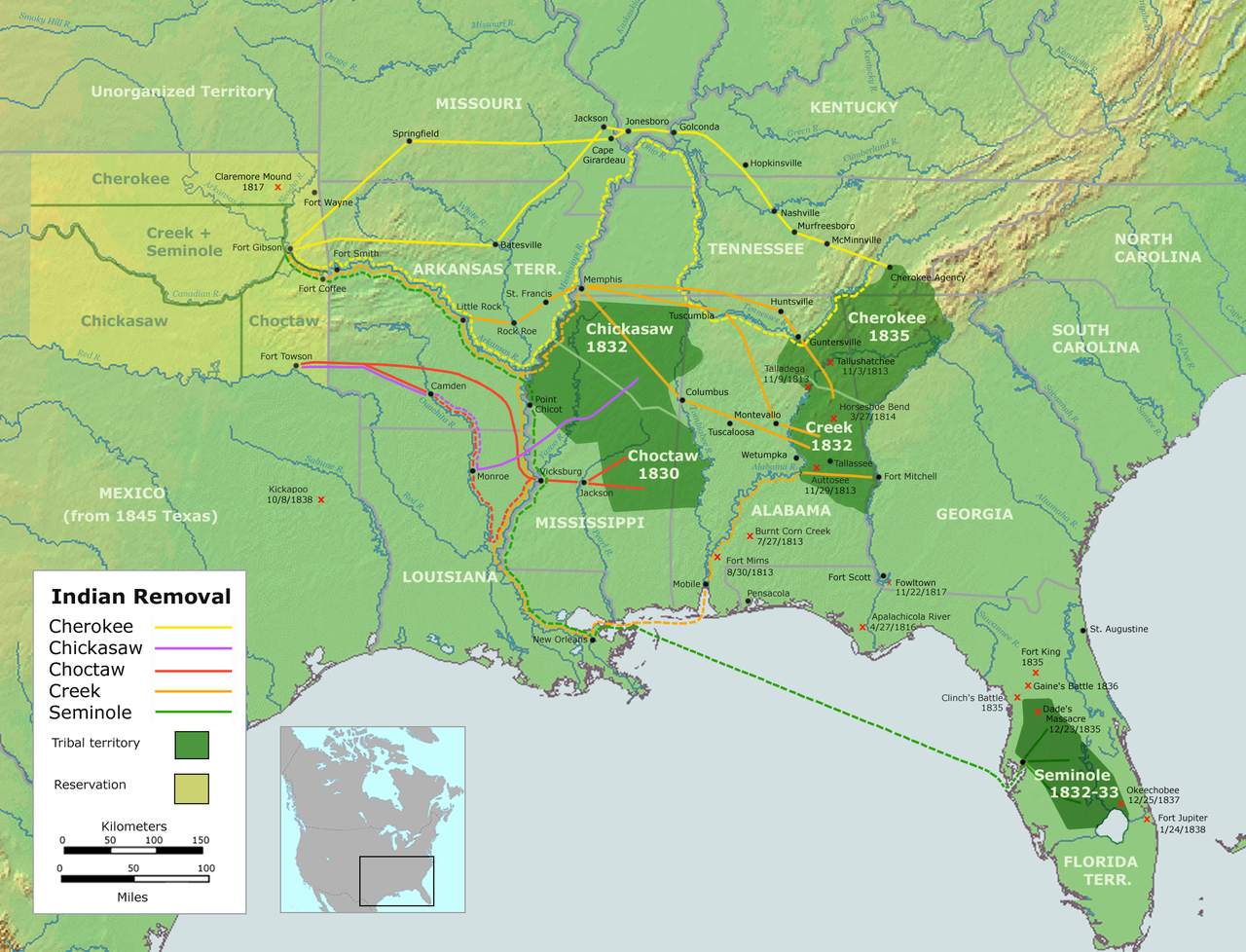
Indian removal policy – When tensions and violence between American settlers and the Indians increased, a movement to relocate certain Indian populations grew more popular. Jackson became an advocate for this relocation policy, and he had many supporters in both the Senate and House who agreed with his goal. On May 26, 1830 Congress passed the Indian Removal Act, which Jackson signed into law.
Reforms – In an effort to purge the government of corruption of previous administrations, Jackson launched presidential investigations into all executive Cabinet offices and departments. He believed appointees should be hired on merit and therefore withdrew many candidates he believed were lax in their handling of monies. Similarly, wasting the people's money is a big Trump complaint.

Jackson repeatedly called for the abolition of the Electoral College by constitutional amendment in his annual messages to Congress as President. Also for limiting the office of President to a single 4-year term.

Jackson's time in the presidency saw various improvements in financial provisions for veterans and their dependents. The Service Pension Act of 1832, for instance, provided pensions to veterans "even where there existed no obvious financial or physical need", while an Act of July 1836 enabled widows of Revolutionary War soldiers who met certain criteria to receive their husband's pensions.

Bank Veto – Jackson vetoed the bill to recharter the Second Bank of the United States in 1932 because he believed it was fundamentally a corrupt monopoly whose stock was mostly held by foreigners. He went on to win the 1932 election in a landslide.

Assassination – Jackson was the recipient of the first recorded physical attack on a U.S. President when an unemployed house painter aimed a pistol at Jackson, but it misfired. Trump has already been the object of death threats.

Temperament – Jackson's quick temper was notorious. Historian H.W. Brands says, "His audacity on behalf of the people earned him enemies who slandered him and defamed even his wife, Rachel. He dueled in her defense and his own, suffering grievous wounds that left him with bullet fragments lodged about his body."

Legacy – Historian Charles Grier Sellers says "Andrew Jackson's masterful personality was enough by itself to make him one of the most controversial figures ever to stride across the American stage."

Donald Trump
Andrew Jackson
US elections
  • 513 views

Comments (6)

Andrew Jackson and the Cherokee

Hadding

9 years 5 months ago
Permalink
New

Jackson had no animosity toward the Cherokee. He adopted a Cherokee boy, who died. The idea of relocating the Cherokee was not fundamentally motivated by hostility toward the tribe. There were problems of jurisdiction because the Cherokee Nation overlapped several states. There was also gold discovered in the Cherokee territory, and some people like to make that the explanation, but I don't believe that this was Jackson's motive.


The "Trail of Tears" happened during the administration of Jackson's successor, Martin Van Buren.


Under Jackson, Representatives of the Cherokee had signed the Treaty of New Echota, promising to relocate to Oklahoma, and some of them abided by the treaty but many did not. Because of that, ultimately, they were forcibly relocated. The "Trail of Tears" strictly speaking refers to part of the journey through an area where there was no road for wagons and they had to walk.


Only those Cherokee living on Federal land were subject to the Treaty of New Echota. Cherokees who owned private property did not have to move.


The relocation was not all bad for the Cherokee. They are one of the few eastern Redskin tribes that still exists in significant numbers instead of being absorbed. They would still have their own territory if they had not given the Federal government an excuse to take it away by taking sides with the Confederacy.


Some have pointed out that living proximate to Whites was not good for the Cherokee, because they were preyed upon by merchants. Merchants would marry into the tribe in order to gain the legal right to sell firewater etc. to the Cherokee. The most famous opponent of relocation, Chief John Ross, was only 1/16 Cherokee, and was descended from one of those merchants. One suspects his motives.

Signed by Jackson

carolyn

9 years 5 months ago
Permalink
New

Yes, it did, but it was signed into law by Jackson in 1830, during his first term!

On May 26, 1830 Congress passed the Indian Removal Act, which Jackson signed into law.

As you said, the "trail of tears" forced march was only the last part of the process that took place after they had attempted to get them to leave voluntarily. So it happened in Van Buren's term, but he was not the one engaged in its passage. Jackson was, so he gets the blame. Just like Trump finds it politically expedient to blames Bill Clinton for NAFTA because he's the one who signed it.

Jackson, according to historian H. W. Brands, sincerely believed his population transfer was a "wise and humane policy" that would save the Indians from "utter annihilation".

In reply to Andrew Jackson and the Cherokee by Hadding

If the key complaint about

Hadding

9 years 5 months ago
Permalink
New

If the key complaint about the removal of the Cherokee that did not abide by the treaty is that it was handled roughly and that some died along the way, that's not a matter of policy but of administration. Jackson might or might not have handled it differently than Van Buren.

In reply to Signed by Jackson by carolyn

Yes,

carolyn

9 years 5 months ago
Permalink
New

that's true.

In reply to If the key complaint about by Hadding

Good comment about Andrew

Don Advo

9 years 5 months ago
Permalink
New

Good comment about Andrew Jackson.  

I miss your broadcasts. You were and are a one of a kind.

Panic

brucewhain

9 years 5 months ago
Permalink
New

Jackson caused the Panic of '37 by demanding "specie payment" for government land. It might have been ok if he'd implemented it gradually. As it hapened the effects were longstanding. Ron Paul's End the Fed plank would have had the same effect, though I think he knew this. (It got him more public approval than any other proposal.) The Banksters could just pull a retreat from dollar hegemony, like the brexit run on the pound that is still continuing - to express their displeasure with Trump. (They now control the markets so thoroughly, including oil used to squeeze Russia.) but they have their own interests tied up in it - maybe have a war and shift the monetary center to Moscow.

My Articles

  • Early Articles
  • The Third Reich
    • Hans-Ulrich Rudel: The man who might have been the next German Führer
    • The Search for WWII Mass Graves
    • The Fake Legends of Adolf Hitler’s “Jewish Grandfather”
    • Latest expression of virulent Jewish hatred: Hitler's parents' grave destroyed
    • The Gleiwitz “False Flag” Incident is Pure Fiction
    • Nuremberg hangman was a U.S. Navy-diagnosed psychopath who slowly strangled top Nazis
  • Heroic Women
    • Hanna Reitsch – warrior of flight and freedom
    • The Mothers Movement - Agitating Against American Involvement in World War II
    • Florence Rost Van Tonningen
  • Holo Frauds and Quacks
    • Zisblatt: A Special Jewel
    • "Diamond Girl" Fiction
    • Second Response to J. Neander
    • Denis Avey: Man Who Would Be Righteous
    • Avey, BBC ,and British Government
    • Why BBC and Labour Backed Avey Hoax
    • Pedophile Promotes Denis Avey Hoax
    • The Shadowy Origins of Night
    • Elie Wiesel and the Mossad, Part 1
    • Elie Wiesel and the Mossad, Part 2
    • Elie Wiesel and the Mossad, Part 3
    • Elie Wiesel and the Mossad, Part 4
    • Septuagenarian’s “Holocaust” memories dangerous to youth, wrong as history
    • “Child survivor” Paul Argiewicz and the missing five years
    • Time to call Ken Waltzer a fraud?
    • Max Hamburger Says He Is the ‘Zombie Man’
    • Naftali Fürst claims to be in Famous Buchenwald Photo as a 12-year-old boy
    • Martin Gray: Another Polish Jew surlievor*
    • Yehuda Bacon memoir at Elie Wiesel Cons The World
    • History teacher who outed holocaust fraudster Joseph Hirt calls for apology or prosecution
  • More Holocaust Revisionism
    • Jewish population figures don't add up
    • My response to Alan Dershowitz's essay “The origin of fake news in holocaust denial” published at Gatestone Institute
    • Hungarian Deportation: An Objectivity Lesson
    • Thoughts on the Jewish Problem and the HoloHoax
  • World Jewish Congress
    • Fake Documents Supporting Auschwitz Hoax
    • The Hoax that won't die
    • History of the World Jewish Congress
    • Critic: It's not just the Jews
    • Circular Reasoning and the Holocaust
  • Special Treatment for Jews
    • Stop Special Treatment for Jews – a way forward
    • New Jersey authorities expose Jewish welfare fraud
    • How Orthodox Jewry is robbing an American town
    • Religion is key to Lakewood's 'special treatment' for Jews
    • New Jersey rabbis face prison in kidnapping conspiracy
    • Explosive growth of the ultra-Orthodox community in Lakewood
    • Lakewood's woes: Jews create chaos in Gentile societies
    • Lakewood Orthodox welfare cheats offered amnesty
    • Large Orthodox Jew families are an unfair burden for schools
    • Rapid growth of Orthodox population creating havoc in NY-NJ
    • Orthodox clinic owner steals $7 mil from Medicaid
    • Mosberg indicted in 2008 on corruption, bribery charges
    • New Jersey town's losing battle to prevent Orthodox Jewish takeover
    • Seven NY Orthodox in $14 million scam to steal school money
    • Brooklyn clinic owned by Orthodox Jews investigated for vaccine fraud
    • Fox News on problems Hasidic Jews bring to U.S. communities
  • Movement Controversies
    • Kevin MacDonald on record saying whether the Holocaust actually happened is “not important”
    • Greg Johnson echos Kevin MacDonald in opposing 'Holocaust' revisionism - One must ask why
    • Everything Greg Johnson knows about Holocaust Revisionism he learned from Mark Weber
    • The Unforgivable Sins of Mark Weber
    • The Goebbels-Vlasov-Irving Question
    • The Goebbels-Vlasov-Irving Question, Part 2
    • The Rise and Fall of Tribal Administrator Rodney Martin

Ein Anderer Hitler

  • The Battle of the Architects
    • Giesler on Speer: The Battle of the Architects
    • Battle of the Architects, Part 2
    • Battle of the Architects, Part 3
    • Battle of the Architects, Part 4
    • Battle of the Architects, Part 5

Buy this book here or here

Wenger Family Archive

  • Willy Wenger's Writings
    • Childhood
    • The great hope: The German Reich
    • Referendum of April 10th, 1938; 1939 & the Napola School
    • The Odyssey of Fahnenjunker Wenger (part one)
    • The Odyssey of Fahnenjunker Wenger (part two)
    • Albin's Story
    • The Final Flight of Poldi Wenger - April 10, 1945
    • The Passing of an Era – Remembering Willy Wenger 1926-2017
  • Leopold Wenger
    • Hitler Youth
      • Out and About on the Bicycle 1936-37
      • Great Ride to Nuremberg for 1937 N-S Party Convention
      • The Days of Our Revolution 1938
    • Napola Letters
      • April-May 1939
      • May-June 1939
      • July-November 1939
    • Wartime Service
      • Letters from Nov. 1939-April '40
      • Letters from April-Dec. 1940
      • France: January-April 1941
      • France, May-December 1941
      • France, February - July 1942
      • France, July-December 1942
      • France, January-June 1943
      • Sicily and Lake Constance, June-Nov. 1943
      • Eastern Front, Nov 1943-Feb 1944
      • Ukraine-Bessarabia, March-June 1944
      • Last letters from Eastern Front, Aug. 1944-Jan. 1945
      • A close encounter between wartime rivals only revealed 74 years later
  • Wenger Family Archive Index

The German Reich

  • Hostility towards Germans
    • The Anti-German Narrative in the West
    • German Self-Hatred and Leftist Ideology
    • White Guilt and Islamic Chauvinism
    • Britain's 100 year war against Germany
    • Searching for the roots of persistent anti-Germanism
    • Final Interview With Erich Priebke
    • Interview: Horst Mahler on the German Reich
    • Interview: G. S. Viereck's 1923 interview with Adolf Hitler
    • Odeonsplatz: Interview with Werner Bräuninger
  • Law & Government
    • Kristallnacht
      • A closer look at Kristallnacht 1938 - Jewish hoax?
      • Assassination and terror is the method of Jewish ethnic warfare
      • The Jewish Declaration of War
      • What really happened on November 9, 1938 in Munich
      • Damage from 'Kristallnacht' greatly overstated by world press
      • Psychological warfare operations explain 'Kristallnacht'
      • Ingrid Weckert considers 'Cui Bono?' – Who benefited from Kristallnacht?
      • Pegida-Dresden, Tatjana declares guilt complex over!
      • 75 Years after "Kristallnacht"
  • National Socialism
    • Mein Kampf, vol. I
      • On 'Public Opinion'
      • On 'The Majority Principle'
      • On 'Jewish Democracy' and 'The Importance of the Spoken Word'
      • On Connecting With The Mass and The 'Away-From-Rome' Movement
      • On 'Defects in our Educational System' and 'Concentration on a Single Enemy'
      • On 'Anti-Semitism On a Religious Basis'
      • On 'State and Economy'
      • On 'The Moment of Decay'
      • Adolf Hitler on 'The World War'
      • On 'The World War' part 2
      • On 'The World War' part 3
      • On 'War Propaganda'
      • On Discovering Gottfried Feder
      • On How He Joined the DAP
      • On 'Causes of the Collapse'
      • On 'Causes of the Collapse', part 2
      • On 'Causes of the Collapse', part 3
      • On 'Causes of the Collapse', part 4
      • On 'Nation and Race'
      • On 'Nation and Race', part 2
      • On 'Nation and Race', part 3
    • Mein Kampf, vol. II
      • On the Political Meaning of 'Folkish'
      • On The State, part 1 - Germanization
      • On The State, part 2 – Nature and Purpose
      • On The State, part 3 – Racial Hygiene and Physical Education
      • On The State, part 4 - Needed changes in education
      • On The State, part 5 - Selecting talent over social class
      • On Subjects and Citizens in the National Socialist State
      • On Personality and the Folkish State-Concept
      • On the Early Struggle: Significance of the Spoken Word
      • On Worldview and Organization of the Folkish State
      • On Conflict With the Red Front
      • On Conflict With the Red Front, part Two
      • Why the Strong Man is Mightiest Alone
      • Regarding the Meaning and Organization of the S.A. (Part One)
      • Regarding the Meaning and Organization of the S.A. (Part Two)
      • Regarding the Meaning and Organization of the S.A. (Part Three)
      • The Mask of Federalism
      • Propaganda and Organization
      • The Trade Union Question
      • German Post-War Alliance Policy
      • Germany's Policy in Eastern Europe, Part One
      • Germany's Policy in Eastern Europe, Part Two
      • The Right to Emergency Defense
  • Führer Speeches

Race & History

  • Ancient Aryan History
  • Race in Civilization
    • The Importance of Race in Civilization
    • Why are you obsessed with race? What is your agenda?
    • The Racial Awakening of the German People by Dr. Rudolf Frercks, parts 1-3
    • The Racial Awakening of the German People by Dr. Rudolf Frercks, parts 4-8
    • The Racial Awakening of the German People by Dr. Rudolf Frercks, parts 9-10
  • World War I
    • The Fatherland
      • The Fatherland weekly covered The Great War in Europe from a German-American perspective
      • Lying during war: A sampling from “The Fatherland”
      • Who were the lawbreakers? Who were the liars?
      • Further reports on criminal treatment of German-Americans by England
      • Did you know? Excerpts from “The Fatherland” reveal insights into Great European War
      • The state of American neutrality in February 1915
      • An essay on English transgressions vs the will of Providence
      • Did the US-UK alliance against Germany-Austria begin long before 1917?
      • The Lusitania tragedy turned into pretext for US to enter war
      • Striking examples from The Fatherland that support the One War thesis
      • In September 1915, German-Americans still perceived as lesser Americans
      • Why the Money Trust wanted war: The British "Gold Plot"
      • More on the Money Trust—The American Pilgrims Society
      • The Brussels documents and the heresy of Woodrow Wilson
      • In 1916, Wilson Administration drops façade of neutrality; attacks German Americans
      • Henry Ford and Cecil Rhodes, on opposite sides, make news in The Fatherland
      • An Exchange of Letters bearing on the British Ideal of Cecil Rhodes
      • America moves closer to war; Wilson unhappy with conciliatory German Note
      • Outnumbered German Fleet bests the British in the great Battle of Skagerrack
      • Political parties choose their 1916 nominees: Hughes and Wilson
      • The submarine Deutschland makes surprise visit to America!
      • The Kaiser answers his American attacker
      • Zeppelins strike fear in English towns and ports
      • Wilson's reelection advances Anglo-American alliance against Germany
      • 'The Fatherland' exposes ruthlessness of US conduct of Philippine War under Germany-critic Elihu Root
      • More revelations of Anglo-American crimes as condemnation is heaped on Germany
      • Wilson addresses Senate; proposes Monroe Doctrine 'for the world'
      • Talk of peace in January 1917 raises hopes, proves deceptive
      • Little hint yet of dramatic events about to break
      • Wilson breaks relations with Germany; 'The Fatherland' takes new name
      • Final installment from The Fatherland—Germany enforces total U-boat blockade
  • World War II
  • Hitler and the Slavs

Women & Family

  • Five Race Conscious Women
  • For and About Women
  • Health
  • Heroic Women
  • Home Schooling
    • A Family Mission Statement
    • Home Schooling News
    • Top 100 homeschool websites
    • The Salina, Kansas Exam
    • History for Kids
  • Links to Other Motherhood Articles

Art & Culture

  • Art News
  • Carolyn's Ancestry
    • History of Sant Anna
    • My DNA results
    • This is Larry Kahant

JAN27
International Day of Commemoration in Honor of the Revisionists Who Introduced Sanity to the Auschwitz “Death Camp” Narrative
 

User menu

  • Log in
  • Reset your password

Copyright © 2026 Company Name - All rights reserved