


Not only has he just published an exceptional article about Mein Kampf and Adolf Hitler, but Dalton reveals he is also working on a new English translation of Mein Kampf – a side-by-side German-English translation, no less! This is fantastic news. I think he had better make a big first print run when he publishes it because it will no doubt be highly desirable. He may become the first revisionist author to get rich on his work!
Everything Dalton has done to date has been outstanding, in my opinion. He is one of those writers who seems to want to truly enlighten his readers, so he puts the facts of the story first and gets himself out of the way. For this reason, and others, he is perfectly suited to do a new Mein Kampf translation we can have faith in.
The first revisionist work I know by Dalton is the well-known Debating the Holocaust: A New Look At Both Sides” (2009), which contrasts the “exterminationist” and the revisionist views in an impartial and thorough manner. The book was very successful, as holocaust revisionist books go.
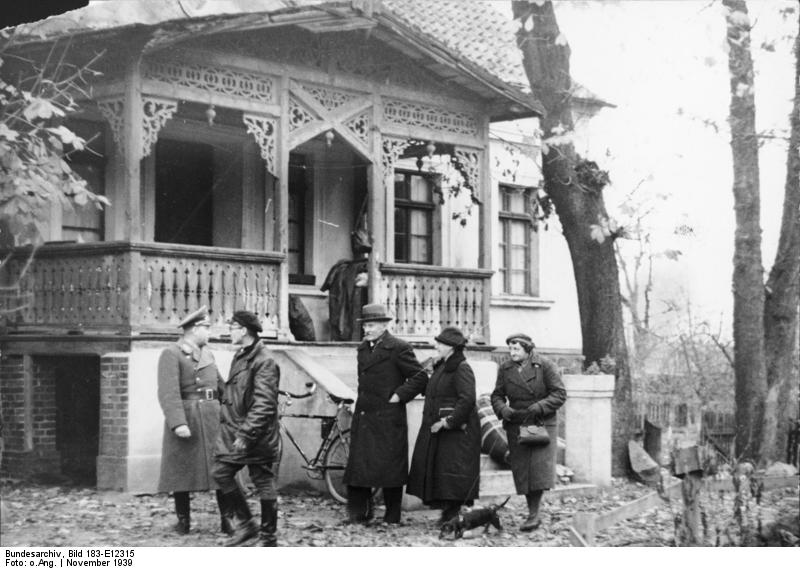
Baltic Germans inspect their new home in Warthegau, Nov. 10, 1939. Many thousands have already moved into the regions freed from the former Polish occupiers after their 20-year interruption, and have begun building up. [This was the caption at the time.]
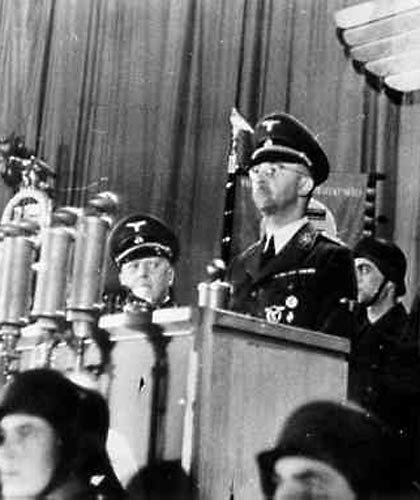
Reichsfuhrer-SS Heinrich Himmler
"Tag der Freiheit" (Freedom Day) speech
Posen, Warthegau, 24 October 1943
Translated by Carlos Whitlock Porter Translation copyright 2016 Carolyn Yeager
INTRODUCTION by Carolyn Yeager
Reichsgau Wartheland, also called Warthegau, was a National Socialist German administrative district formed in 1939 from what had been Polish territory for the past 20 years, granted by the Versailles Treaty following WW1. The name derived from the main river, Warthe; the capital city was Posen. The Gauleiter (Party leader of a Gau or District) of the Warthegau from '39 to '45 was Arthur Greiser.
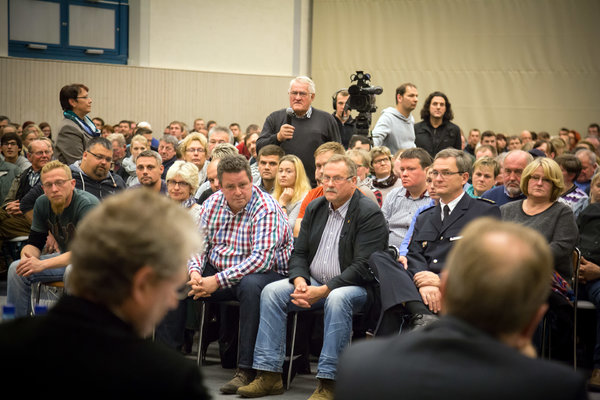
It appears that every resident of Sumte attended a meeting on Wednesday to discuss the plan to move 1000 migrants from Africa and the Middle East to their village. The Mayor is in front row center, in jeans. Photo credit Gordon Welters for The New York Times
Holger Niemann, 32, a self-described National Socialist and admirer of Hitler, is an elected representative on the district council that governs over the small village of Sumpte, Germany – population 102 - in Lower Saxony. He sees opportunity in the migrant crisis. “It is bad for the people, but politically it is good for me,” Mr. Niemann said of the plan, which would leave the German villagers in Sumpte outnumbered by migrants 10 to one.
Does the National Socialist struggle, today, still make sense? In this first part, I rely on a statement of Hermann Göring, at the Nuremberg trials, to answer in the affirmative. Then, in order to parry the first objection, I explain why the concentration camps in Germany were only an accident of history ... Vincent Reynouard
Excellent research, as usual, from Reynouard. The first camps were set up to detain the communists, who were an existential threat to the new Hitler government and NS state. Please watch this 30-minute video with English subtitles full screen here.
It is reported that 79-year-old dissident Horst Mahler was released from prison on Sept. 3rd after serving 2/3 (10 years) of his sentence, but will remain on probation for four more years. The probation terms are no doubt why we hear nothing from him, and nothing is or will be written about him in the media. He has been effectively silenced.
He is also critically ill. His left leg was amputated in prison because of neglect of his health by prison officials. His home needs some refurbishing to accommodate his now disabled status. It is up to the truth-for-Germany community to contribute to the financial needs of our courageous comrade. Here is how you can help:
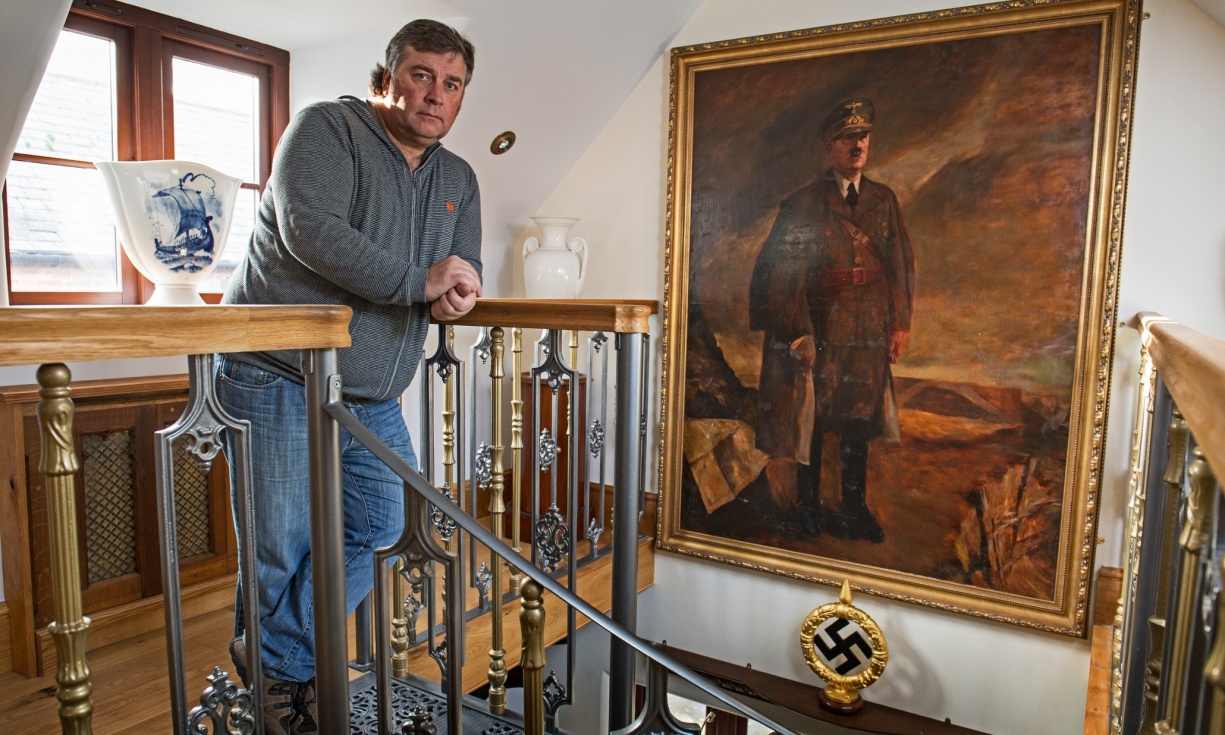
Kevin Wheatcroft stands in his private home in England in 2015, next to what he says was Adolf Hitler's favorite war portrait of himself.
What will happen to Kevin Wheatcroft's' amazing collection of World War II German military vehicles and National-Socialist memorabilia now that he is publicizing it to the world?
The hefty Mr. Wheatcroft is 55 years old, and looks to me like a pretty good candidate for a heart attack in the next 10 years. How will he preserve what he has spent his life collecting? -with more heartfelt feelings than financial ones, it appears. The son of a WWII British "war hero" and his German war bride, he told a Guardian newspaper reporter that "Adolf and Hermann" are "my real love." If that is true, we can expect Mr. Wheatcroft to have a care about what happens to his collection.
Will he build and endow a museum (or two) to permanently house it all? But what can stop the Jewish-British government from confiscating the whole she-bang and destroying it? Or turning any museum he creates into a "documentation center" which tells the whole story as a criminal enterprise by "Adolf and Hermann" (and company).
Some top-notch famous sculptures by Adolf Hitler's two favorite artists, for whom he built gigantic studios for their super-large works to be created for public buildings and public spaces, have been confiscated by theBerlin State Office of Criminal Investigation. It is the preliminary determination that the rightful owner of this artwork is the German State, or German government.
Among the masterpieces discovered and expropriated from their current owners are (click on images to enlarge):
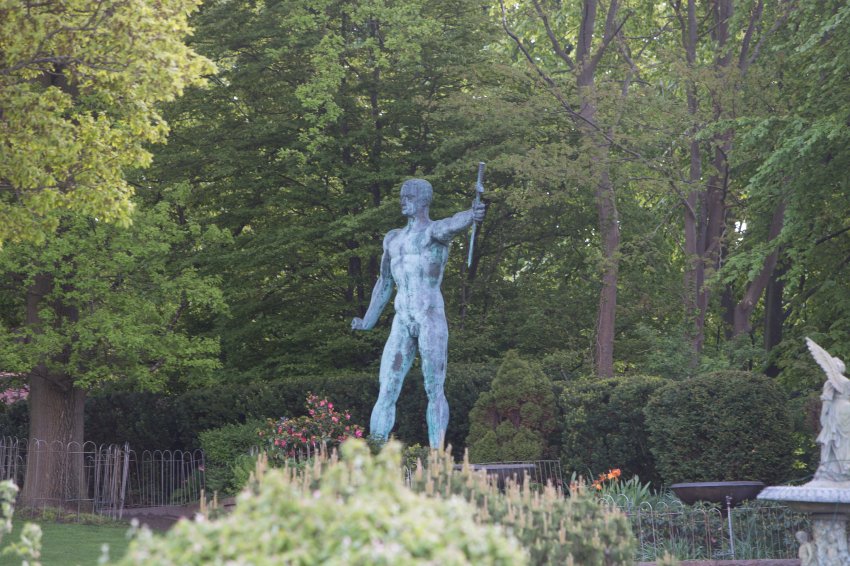
"Die Wehrmacht," one of two sculptures created by Arno Breker for the main courtyard of Hitler's New Reich Chancellery in 1939 was discovered on a large estate near Kiel in northern Germany.
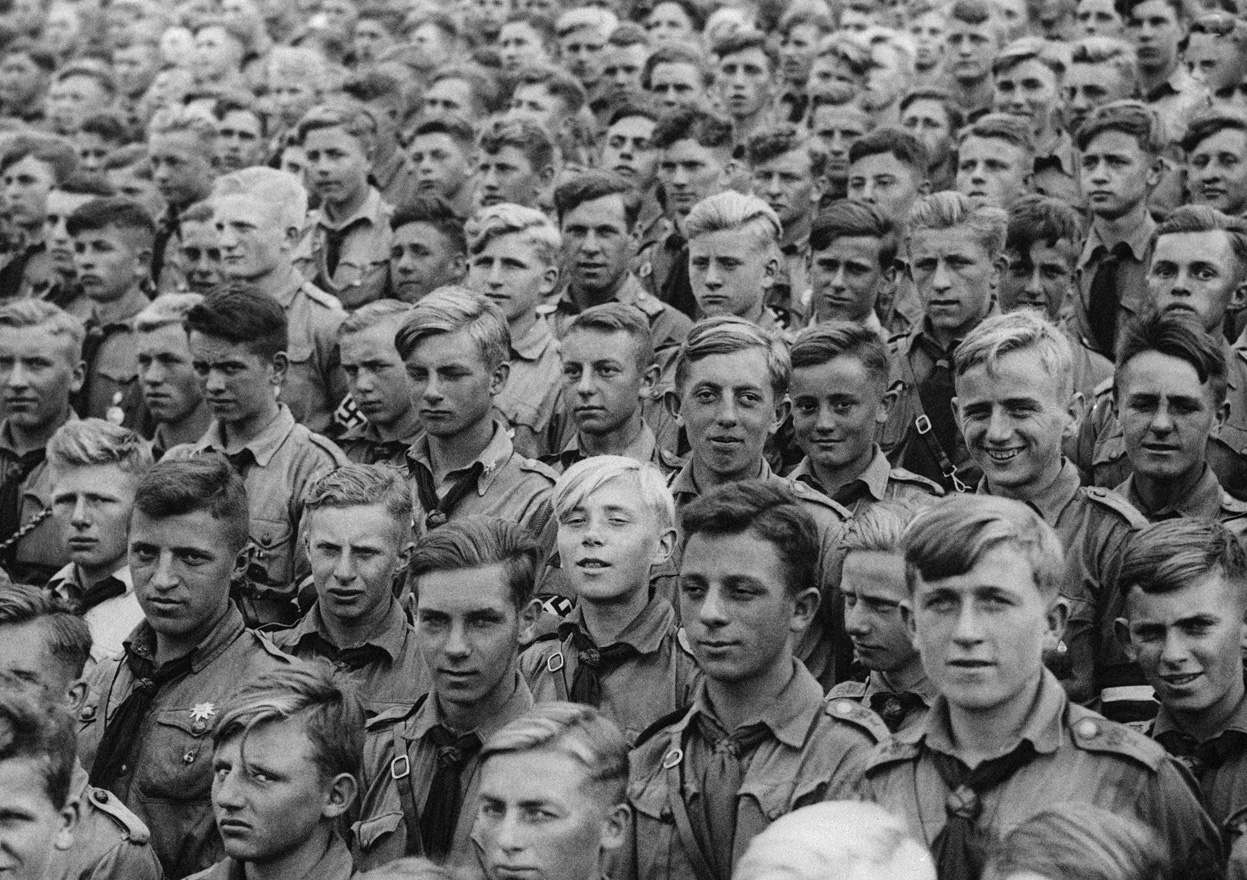
Hitler Youth at Nuremberg Party Day in 1935: the future German leadership before the Jews brought about world war against them. Enlarge
Carolyn and Ray conclude this special reading of Adolf Hitler's private address to Generals and officers on May 26, 1944. In the second half, Hitler emphasizes how he overcame the class system in Germany, and the opportunities for advancement that exist for ALL German folk. He talked frankly about the need for his Jewish program and called it ruthless but not cruel, making the point that kindness to the Jews meant cruelty to his own people.
He encourages his officers to care for their soldiers as he cares for the German people.
In this 2nd part we find that Veronica Clark changed the word "Volk" to "Rasse" (People to Race) in her translation that she is selling in a book. We also find that Hitler never mentioned "the Slavic question" and remained the same as ever toward Poland. 1hr33m28s
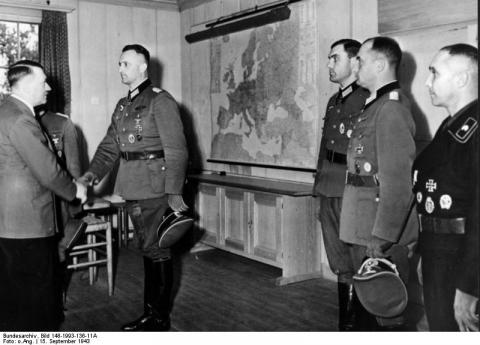
The Fuehrer greets officers at his Wolfsschanze headquarters in West Prussia in Sept. 1943.
This privateaddress by Adolf Hitler to Generals and Officers that took place at the Platterhof Hotel on May 26, 1944 is very interesting and revealing but is NOT Hitler's “most significant speech” as has been falsely promoted by non-historian Veronica K. Clark (aka Weronika Kuzniar). It wasn't even a speech, although it was long. As he addressed the officers, he was sitting down comfortably in a room where they were also seated. He did not speak from a prepared text.
Less than two months later, on July 4, 1944, he addressed others of his staff in the same room of the same hotel, which he used often for special meetings.
Tonight's program will look at a number of topics that do not merit an entire show, in my opinion, but are taking up space in my mind and want to be expressed. A "clearing the desk" type of show, perhaps.
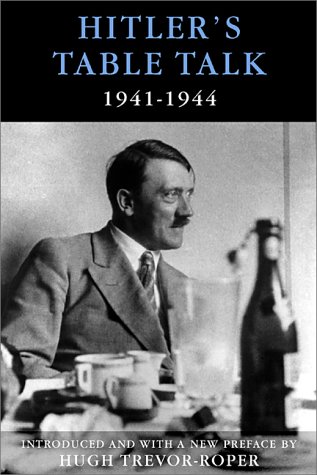
Refuting the "evidence" that Hitler's Table Talk is fake based on statements about Christianity;
Ray Goodwin and Carolyn Yeager bring you the final reading from the night ofNov. 29-30, 1944 between Adolf Hitler and Martin Bormann.
Following this short reading, we discuss the general content of these Führer monologues that spanned 1941 to 1944. 1h56m. Discussion includes:
Hitler and Bormann agree on the "fatal relationship" between Communism and Christianity;
Ray gives a personal overview of the contents of Table Talk;
Carolyn describes how TT shifted her thinking about Hitler in a number of areas, but mainly Christianity;
Overview of Hitler's highly controversial criticisms of the Christian Churches in Germany and Christian doctrine;
Richard Carrier is the main source of the reports that Table Talk is untrustworthy and the Trevor-Roper edition translated by Cameron and Stevens is "not what Hitler actually said."
More controversial quotes from Hitler about "Russians, Slavs and Stalin" and "Race and Jews";
Where we are today considering the subjects addressed in Table Talk.
The edition of Hitler's Table Talk being used was translated by Norman Cameron and R.H. Stevens, published by Enigma Books, New York, and can be found as a pdf here
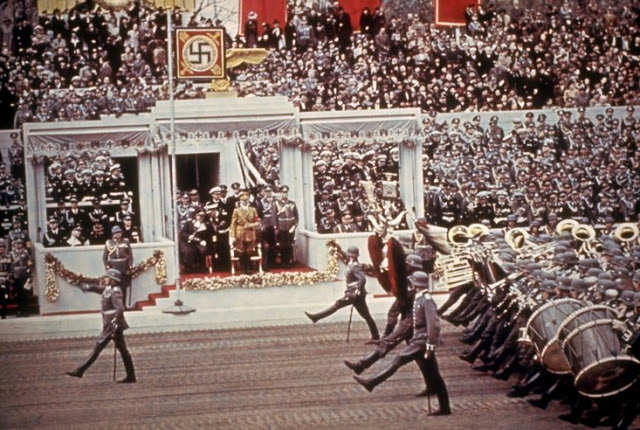
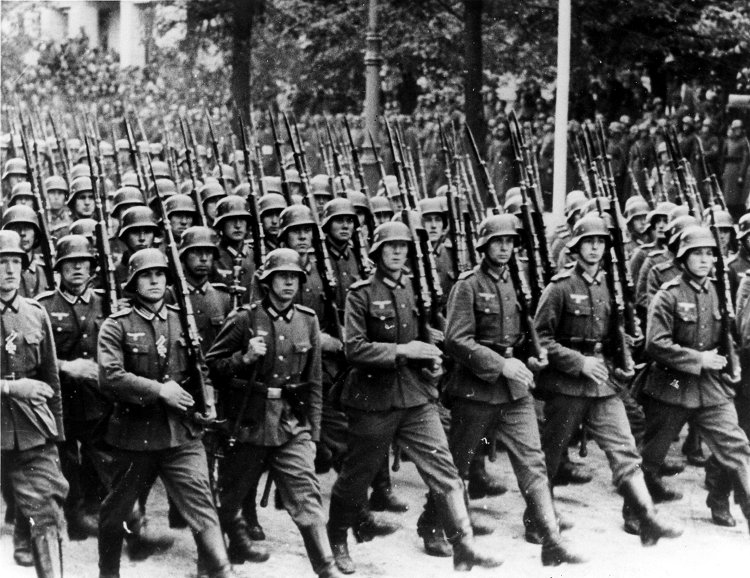
April 20, 1939, Berlin puts on an elaborate celebration in honor of their Fuehrer's 50th birthday. Here, troops leading a marching band goose-step past the reviewing stand and invited guests. Enlarge
Hadding Scott joins Carolyn Yeager to discuss why this is so, and to speculate on what The Fuehrer would have to say if he made an appearance in the world today. One answer to his continuing appeal is that "Hitler was right!" Has anyone ever been more right than he, and also proven it? Discussion includes:
This Episode #55 brings us almost to the end of the conversations recorded in Table Talk. Next week will be our final program of this series, when Ray and I will give our personal views of its authenticity, meaning and value -- after which we will take phone calls from listeners. If you want to weigh in, be sure to listen to the live show next week, April 23 at 7pm Central (8pm Eastern, 5pm Pacific) at Blogtalk.
Image
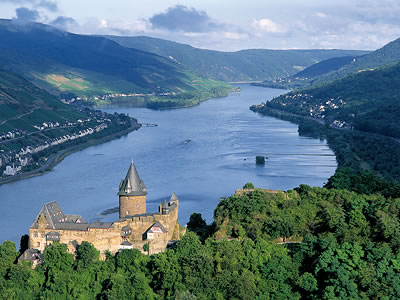
Scenic view in the Rhine River that Hitler appreciated so much.
Carolyn Yeager and Ray Goodwin read and comment on the June 17, 1943 - May 16, 1944 lunch and dinner table monologues by the German Leader, as taken down in shorthand by an aide. 1h25m. Included in this episode:
Fear of the unknown - Great battleships no longer useful;
Long discussion of Berlin compared to Vienna, Munich, Linz - Interests of the Reich are paramount;
Finding film actors among the Arbeitsdienst - Art critics can be disregarded for the most part;
Hitler's first sight of the Rhine on way to Western Front in 1914 - Getting away from the crowds that always followed him - the beauties of Austria and Bohemia-Moravia;
Failure of German state to found a German National Church independent of Rome - The 'Modernist' period -Power of the Church to extract obedience;
Differences between research and instruction - Research should be completely unrestricted - German philosophers above British, French and American - Kant, Schopenhauer, Nietzsche;
Hitler argues with leading economist Zwiedineck - After taking power, Hitler's "theories" became sound economy.
The edition of Hitler's Table Talk being used was translated by Norman Cameron and R.H. Stevens, published by Enigma Books, New York, and can be found as a pdf here
Translation of a secret speech for Gauleiters (district leaders of NSDAP) held 2 weeks after the assassination attempt on Hitler by Stauffenberg. Himmler talks about the treacherous and defeatist attitudes activities in the leadership of the Wehrmacht before and during the War, about the conspiracy to kill Hitler and take power in Germany, and the consequences of the 20th of July. A copy of this speech was deposited by Martin Bormann in the Central Archive of NSDAP and today it is at the Institut for Zeitgeschichte in Munich. It was published in Vierteljahrshefte für Zeitgeschichte in 1953.
"Put the young men into the Army, whence they will return refreshed and cleansed of eight years of scholastic slime!"
Ray Goodwin and Carolyn Yeager read and comment on the August 28-31, 1942 lunch and dinner table monologues by the German Leader, as taken down in shorthand by attorney Heinrich Heim. 1h25m. Included in this episode:
Divide and conquer - The blood of our race - Austrian Empire and British Empire run by minority - perpetual warfare;
Criticism of instructional method in secondary schools - too much study not healthy - introduction of universal military service one of greatest events in history;
Germany land of poets and thinkers? - Sharnhorst brought us back to sanity - value of perseverance supported by enthusiasm;
Bolsheviks and prostitution - Lloyd George at Versailles -destruction of Duke of Windsor - Jews in Britain - Churchill an unprincipled swine.
Atten: There was a volume problem during the first 30 min. of this episode which I rectified fairly well with Audacity but it's still uneven. Apologies.
The edition of Hitler's Table Talk being used was translated by Norman Cameron and R.H. Stevens, published by Enigma Books, New York, and can be found as a pdf here
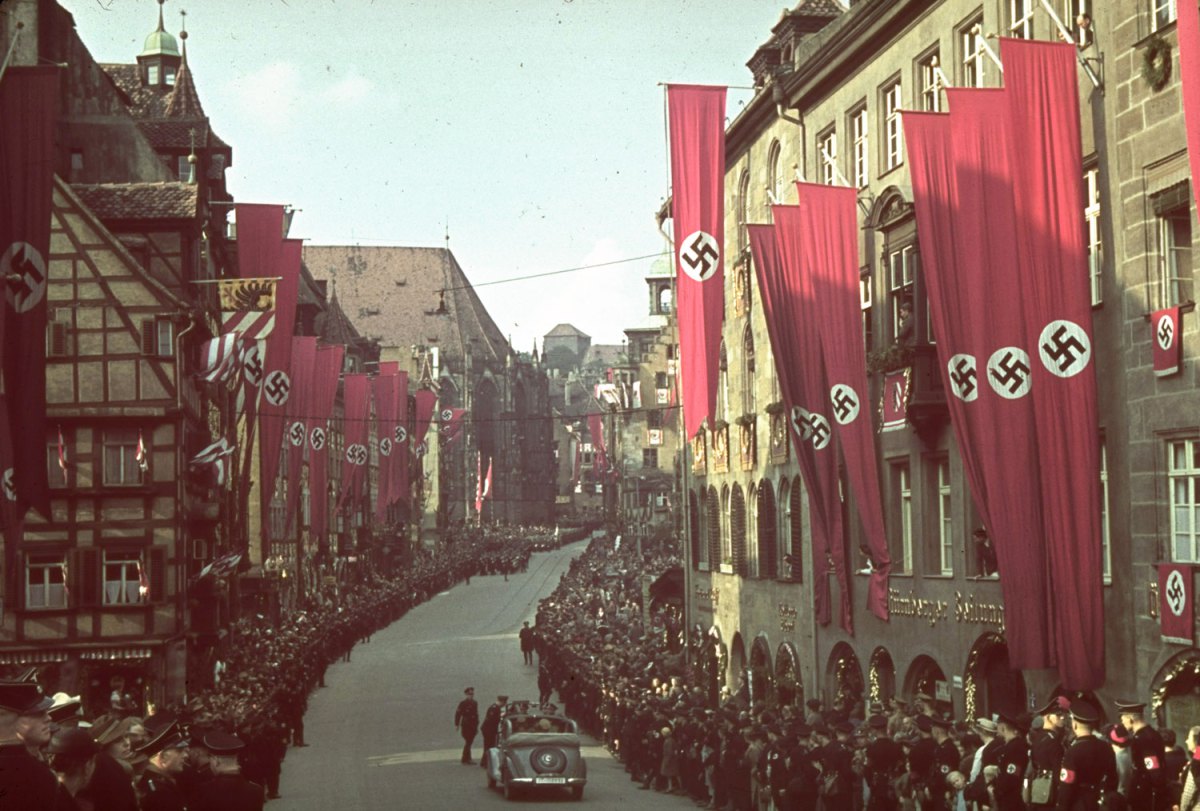
Nuremberg 1938 - No images of Hitler on the banners but the people have gathered at his hotel in order to see him, and he is at the open window, 3rd floor, on the right. Does this mean "cult of personality?"
How does that work? Carolyn answers a friendly email from a listener who likes the Fuehrer but asked that she address some of the “questions and issues” (criticisms) he raised. So here it is, Jim, just for you and those who think like you—which are many.
Survival of the Fittest: Were Hitler & the National Socialists ill-adapted to survive?
Personality cult around Der Fuehrer?
Dunkirk, Barbarossa and war declaration against U.S. were mistakes:
Thanks to the great friend of WWII and Holocaust Revisionism, SHOAHBLOGER, we are gaining more insight into the high-level war-time treason Adolf Hitler had to deal with and into Heinrich Himmler himself.
The speech is described as "The first ever English language translation of a secret speech for Gauleiters held two weeks after the assassination attempt on Hitler by Stauffenberg.
Himmler talks about the treacherous and defeatist attitudes and activities in the leadership of the Wehrmacht before and during the War, as well as about the conspiracy to kill Hitler and take power in Germany.
A copy of this speech was deposited by Martin Bormann in the Central Archive of the NSDAP and today it is at the Institut für Zeitgeschichte in Munich. It was published in Vierteljahrshefte für Zeitgeschicthe in 1953."
Parts 1, 2 and 3 have been posted so far on Shoahbloger's site. Don't miss it, as it is fascinating and eye-opening. When all the parts have been posted, I will copy it here at carolynyeager.net as part of my "important speeches" section I'm going to create, and also write a commentary about it.
Many thanks to Shoahbloger for doing the important work he does ... for free! Real truth-seekers are not in it for money or to advance their careers, but to share truth as widely as possible.
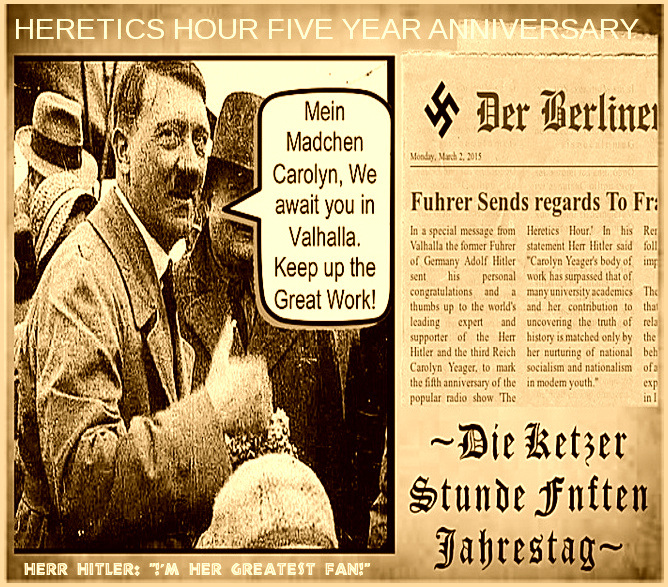
Carolyn Yeager marks five years of hosting this weekly radio broadcast, from its debut on March 1, 2010 up to tonight's program on March 2, 2015. She tells the story of The Heretics' Hour from it's conception in 2009, its birth at Voice of Reason Radio Network in Jan-Feb 2010, and its sometimes tumultuous changes and controversial subjects. She will cover her favorite program topics and "best shows." And she will talk about many of the characters she got involved with and who got involved with her ... for better or for worse.
Hadding calls in at the end for a fairly long discussion covering Voice of Reason, White leadership, organizations and misanthropy.
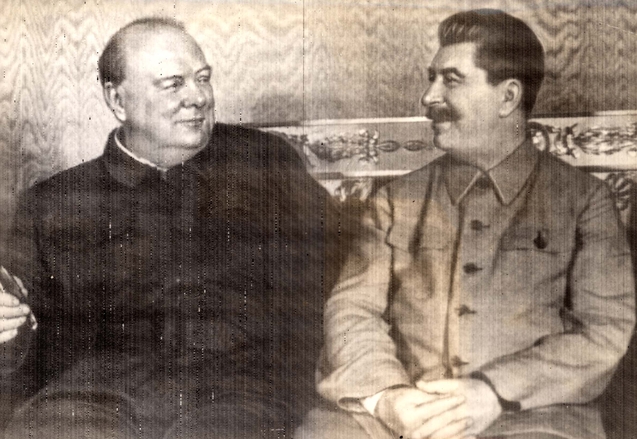
Churchill goes to Moscow in August 1942 to bring a disappointing message to Stalin?
Ray Goodwin and Carolyn Yeager read and comment on the August 7-16, 1942 lunch and dinner table monologues by the German Leader, as taken down in shorthand by attorney Heinrich Heim. 1h23m. Included in this episode:
Churchill to visit Stalin, Hitler is intrigued as to why;
Germans are in Crimea to stay, says AH, and winning over the peasantry;
British have no rights to decide anything in Europe - Rumanians vs Hungarians, and the Viennese;
Riches of Ukraine - Reichsmarks and Ostmarks - the parson class are enemies of the state;
Very interesting account of Hitler visiting the National Club and the Officers' Club in Berlin in 1921, meeting Admiral Schröder, an important early supporter;
Hitler on Dance as artistic expression: most beautiful is the waltz, impressive is the Bavarian Schuhplattler done by men;
Some of the diplomats he's known in Berlin - comments on Stalin - Churchill and the Malta situation.
The edition of Hitler's Table Talk being used was translated by Norman Cameron and R.H. Stevens, published by Enigma Books, New York, and can be found as a pdf here